
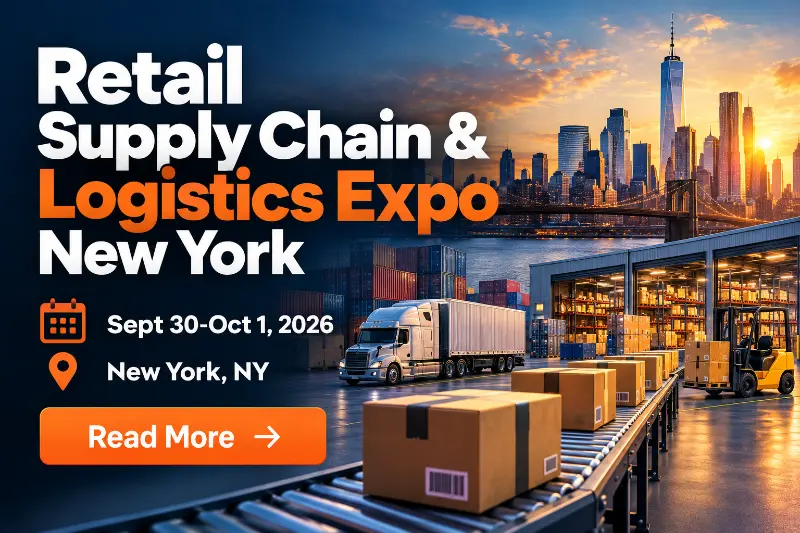
Retail Supply Chain & Logistics Expo New York 2026
 1 minute
September 30-October 1, 2026 | New York, NY
Retail Supply Chain & Logistics Expo New York brings together retailers, ecommerce brands, online sellers, supply chain leaders, logistics professionals, and technology providers for two days focused on building faster, more efficient, and more resilient retail operations. Held at the Javits Center in New York City, the event connects attendees with new technologies, operational strategies, and partners across the retail supply chain and logistics ecosystem.
Here’s what you can expect:
• More than 150 exhibitors showcasing solutions across logistics, fulfillment, transportation, warehouse automation, and supply chain technology
• Keynote sessions and expert-led seminars covering inventory management, fulfillment strategy, customer experience, AI, and operational efficiency
• Opportunities to discover new technologies and practical solutions for streamlining warehousing, distribution, delivery, and returns
• A concentrated audience of retail, ecommerce, supply chain, and logistics professionals looking to improve operations and build new partnerships
• Two full days of networking, education, and direct access to suppliers and industry leaders shaping the future of retail logistics
Free admission. Registration required.
Read More

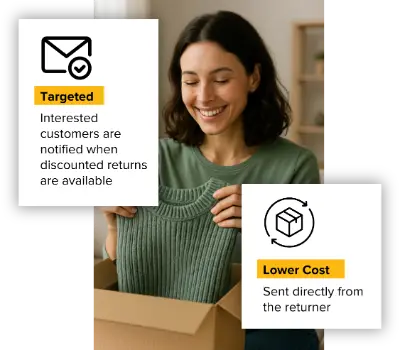
Turn Returns Into New Revenue
Related Articles

Outliers Summit 2026
Nov 5–6, 2026 | NEW YORK, NY Outliers Summit brings ambitious founders, builders, creators, operators, and investors together in New York City for two days focused on building and ...

The Lead Summit 2026
May 20-21, 2026 | New York, NY The Lead Summit 2026 brings brand builders, retail leaders, and senior innovators together for two days in New York focused on what’s next for commer...
Shopify DotDev 2026
July 21-22, 2026 | Toronto, Canada Shopify DotDev 2026 brings together developers, engineers, and technical partners from across the Shopify ecosystem for two days of deep technica...
Outliers Summit 2026

Nov 5–6, 2026 | NEW YORK, NY
Outliers Summit brings ambitious founders, builders, creators, operators, and investors together in New York City for two days focused on building and thinking differently in the AI era.
Day 1 features hands-on sessions covering modern AI tools and operating disciplines, while Day 2 features candid talks and debates with experienced founders and operators.
Here’s what you can expect:
- A two-day program built around “Build” and “Think” themes
- Hands-on sessions exploring practical AI tools and modern operating methods
- Tactical discussions on AI-powered design, digital twins, community building, and agent-driven operations
- Candid talks and debates with experienced founders, creators, and operators
- Networking with founders, executives, investors, and builders from across the startup and technology ecosystem
Registration required.
Read More
ShipStation vs. Cahoot: 21x Faster, Real Results
Get the inside scoop on how a leading merchant switched from ShipStation to Cahoot—and what happened next. See it to believe it!
See the 21x Difference
Turn Returns Into New Revenue
Related Articles
Retail Supply Chain & Logistics Expo New York 2026
September 30-October 1, 2026 | New York, NY Retail Supply Chain & Logistics Expo New York brings together retailers, ecommerce brands, online sellers, supply chain leaders, log...
The Lead Summit 2026
May 20-21, 2026 | New York, NY The Lead Summit 2026 brings brand builders, retail leaders, and senior innovators together for two days in New York focused on what’s next for commer...
Shopify DotDev 2026
July 21-22, 2026 | Toronto, Canada Shopify DotDev 2026 brings together developers, engineers, and technical partners from across the Shopify ecosystem for two days of deep technica...
The Lead Summit 2026

May 20-21, 2026 | New York, NY
The Lead Summit 2026 brings brand builders, retail leaders, and senior innovators together for two days in New York focused on what’s next for commerce, marketing, stores, customer experience, operations, technology, and strategy. The agenda explores the new frontier of brand and retail, with executive speakers, curated networking, 1:1 meetings, workshops, assemblies, and roundtable discussions designed to help attendees benchmark, learn, and build high-impact partnerships. The event is held at Pier 36 in New York City.
I’m attending The Lead Summit (May 20-21) in NYC!
If you’re a brand or retailer, you can attend at no cost plus receive up to $1,000 in travel reimbursement through The Meetings Program.
Registration required. Join me and secure your spot today! Attend for free:
Read More
ShipStation vs. Cahoot: 21x Faster, Real Results
Get the inside scoop on how a leading merchant switched from ShipStation to Cahoot—and what happened next. See it to believe it!
See the 21x Difference
Turn Returns Into New Revenue
Related Articles
Retail Supply Chain & Logistics Expo New York 2026
September 30-October 1, 2026 | New York, NY Retail Supply Chain & Logistics Expo New York brings together retailers, ecommerce brands, online sellers, supply chain leaders, log...
Outliers Summit 2026
Nov 5–6, 2026 | NEW YORK, NY Outliers Summit brings ambitious founders, builders, creators, operators, and investors together in New York City for two days focused on building and ...
Shopify DotDev 2026
July 21-22, 2026 | Toronto, Canada Shopify DotDev 2026 brings together developers, engineers, and technical partners from across the Shopify ecosystem for two days of deep technica...
Shopify DotDev 2026
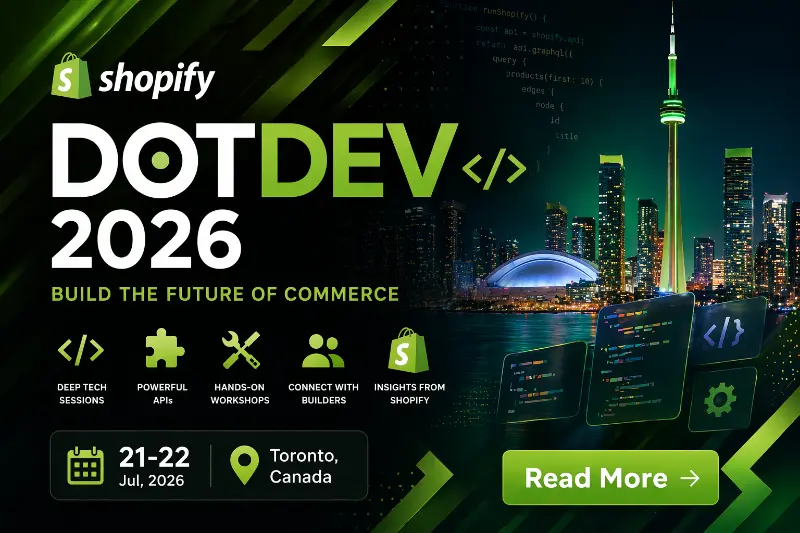
July 21-22, 2026 | Toronto, Canada
Shopify DotDev 2026 brings together developers, engineers, and technical partners from across the Shopify ecosystem for two days of deep technical learning and collaboration. Hosted by Shopify in Toronto, the event focuses on the latest platform capabilities, APIs, and tools that power modern commerce experiences.
Here’s what you can expect:
• In-depth sessions on Shopify’s newest developer tools, APIs, and platform updates
• Technical workshops and live demos focused on building scalable commerce applications
• Insights directly from Shopify engineers and product leaders
• Opportunities to connect with app developers, agency partners, and the broader Shopify dev community
• A collaborative environment designed for learning, experimentation, and innovation
Registration required.
Read More
ShipStation vs. Cahoot: 21x Faster, Real Results
Get the inside scoop on how a leading merchant switched from ShipStation to Cahoot—and what happened next. See it to believe it!
See the 21x Difference
Turn Returns Into New Revenue
Related Articles
Retail Supply Chain & Logistics Expo New York 2026
September 30-October 1, 2026 | New York, NY Retail Supply Chain & Logistics Expo New York brings together retailers, ecommerce brands, online sellers, supply chain leaders, log...
Outliers Summit 2026
Nov 5–6, 2026 | NEW YORK, NY Outliers Summit brings ambitious founders, builders, creators, operators, and investors together in New York City for two days focused on building and ...
The Lead Summit 2026
May 20-21, 2026 | New York, NY The Lead Summit 2026 brings brand builders, retail leaders, and senior innovators together for two days in New York focused on what’s next for commer...
Your Agentforce World Tour New York

Apr 29, 2026 | NEW YORK, NY
Agentforce World Tour New York brings business and technology leaders together for a full day of sessions, demos, and hands-on training focused on Agentforce, Slack, and unified data. Attendees can explore real use cases across major industries, hear the latest Salesforce AI updates, and connect with peers solving similar operational and customer-experience challenges. Free admission. Registration required.
This is where breakthrough AI meets business impact. Explore 130+ expert-led sessions, demos, and hands-on trainings to see how to automate complex workflows, activate unified data, and drive measurable results.
ShipStation vs. Cahoot: 21x Faster, Real Results
Get the inside scoop on how a leading merchant switched from ShipStation to Cahoot—and what happened next. See it to believe it!
See the 21x Difference
Turn Returns Into New Revenue
Related Articles
Retail Supply Chain & Logistics Expo New York 2026
September 30-October 1, 2026 | New York, NY Retail Supply Chain & Logistics Expo New York brings together retailers, ecommerce brands, online sellers, supply chain leaders, log...
Outliers Summit 2026
Nov 5–6, 2026 | NEW YORK, NY Outliers Summit brings ambitious founders, builders, creators, operators, and investors together in New York City for two days focused on building and ...
The Lead Summit 2026
May 20-21, 2026 | New York, NY The Lead Summit 2026 brings brand builders, retail leaders, and senior innovators together for two days in New York focused on what’s next for commer...
TechCrunch Founder Summit 2026
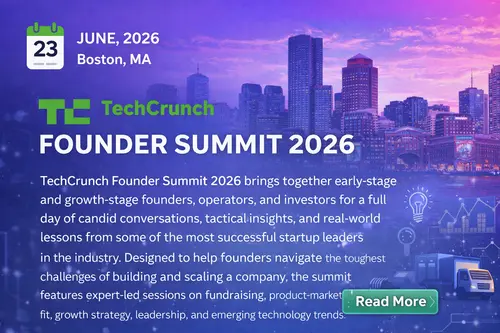
June 23, 2026 | Boston, MA
Join Pulse Commerce at TechCrunch Founder Summit 2026 — a founder-focused event designed for early-stage and growth-stage startup leaders looking to build, scale, and lead enduring companies. Hosted by TechCrunch in Boston, this one-day summit brings together founders, operators, and investors for candid conversations and practical guidance from experienced startup veterans.
The Founder Summit delivers actionable sessions covering the most critical challenges founders face, including fundraising strategy, product-market fit, go-to-market execution, leadership development, and navigating today’s evolving technology landscape. Attendees gain direct insight from successful entrepreneurs and industry experts who have built, scaled, and exited companies across multiple stages.
Whether you’re launching your first startup or scaling an established business, TechCrunch Founder Summit 2026 provides the frameworks, connections, and real-world lessons needed to make smarter decisions and accelerate growth.
Registration required.
Cut Costs with the Smartest Shipping On the Market
Guranteed Savings on EVERY shipment with Cahoot's AI-powered rate shopping and humanless label generation. Even for your complex orders.
Cut Costs Today
Turn Returns Into New Revenue
Related Articles
Retail Supply Chain & Logistics Expo New York 2026
September 30-October 1, 2026 | New York, NY Retail Supply Chain & Logistics Expo New York brings together retailers, ecommerce brands, online sellers, supply chain leaders, log...
Outliers Summit 2026
Nov 5–6, 2026 | NEW YORK, NY Outliers Summit brings ambitious founders, builders, creators, operators, and investors together in New York City for two days focused on building and ...
The Lead Summit 2026
May 20-21, 2026 | New York, NY The Lead Summit 2026 brings brand builders, retail leaders, and senior innovators together for two days in New York focused on what’s next for commer...
Manifest Vegas 2026
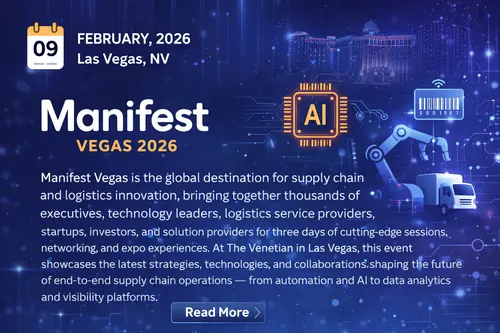
February 9–11, 2026 | Las Vegas, NV
Join Pulse Commerce at Manifest Vegas 2026 — the premier gathering for supply chain and logistics innovation — where shippers, logistics service providers, startups, investors, and technology leaders connect to explore what’s next in end-to-end supply chain transformation. Held at The Venetian in Las Vegas, Manifest brings the industry together for high-impact learning, collaboration, and discovery. :contentReference[oaicite:1]{index=1}
Across three days, Manifest features an all-star lineup of speakers, deep-dive sessions, and an expo floor packed with solutions spanning automation, AI, data and analytics, visibility, warehousing, transportation, and last-mile execution. With a global audience and thousands of attendees from across the ecosystem, it’s a must-attend event for teams looking to benchmark strategies, identify new partners, and accelerate operational performance. :contentReference[oaicite:2]{index=2}
Whether you’re optimizing fulfillment, modernizing logistics, or building the next generation of supply chain technology, Manifest Vegas delivers the insights and connections to help you move faster and smarter.
Registration required.
Cut Costs with the Smartest Shipping On the Market
Guranteed Savings on EVERY shipment with Cahoot's AI-powered rate shopping and humanless label generation. Even for your complex orders.
Cut Costs TodayWritten By:

Indy Pereira
Indy Pereira helps ecommerce brands optimize their shipping and fulfillment with Cahoot’s technology. With a background in both sales and people operations, she bridges customer needs with strategic solutions that drive growth. Indy works closely with merchants every day and brings real-world insight into what makes logistics efficient and scalable.
Turn Returns Into New Revenue
Related Articles
Retail Supply Chain & Logistics Expo New York 2026
September 30-October 1, 2026 | New York, NY Retail Supply Chain & Logistics Expo New York brings together retailers, ecommerce brands, online sellers, supply chain leaders, log...
Outliers Summit 2026
Nov 5–6, 2026 | NEW YORK, NY Outliers Summit brings ambitious founders, builders, creators, operators, and investors together in New York City for two days focused on building and ...
The Lead Summit 2026
May 20-21, 2026 | New York, NY The Lead Summit 2026 brings brand builders, retail leaders, and senior innovators together for two days in New York focused on what’s next for commer...
SaaStr AI: ANNUAL x AI Summit 2026
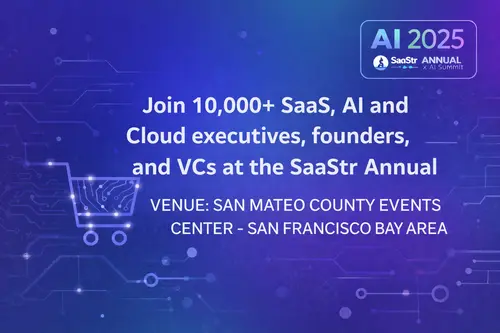
May 12–14, 2026 | San Francisco, CA
Join Cahoot at SaaStr AI: ANNUAL x AI Summit — the world’s largest gathering of SaaS, AI, and Cloud innovators — where 10,000+ executives, founders, and VCs come together to push the limits of what’s possible in AI-powered B2B growth.
This 3-day summit delivers 200+ tactical sessions from world-class founders and rising leaders in AI and SaaS. Get exclusive insights into how today’s top companies are integrating AI into their workflows, scaling faster, and driving revenue more efficiently. Explore actionable strategies, avoid costly missteps, and meet the minds defining the future of intelligent software.
Whether you’re building, scaling, or investing in the next generation of B2B tech, this summit is your playbook for AI-powered success.
Reduced price admission for qualified attendees.
Cut Costs with the Smartest Shipping On the Market
Guranteed Savings on EVERY shipment with Cahoot's AI-powered rate shopping and humanless label generation. Even for your complex orders.
Cut Costs Today
Turn Returns Into New Revenue
Related Articles
Retail Supply Chain & Logistics Expo New York 2026
September 30-October 1, 2026 | New York, NY Retail Supply Chain & Logistics Expo New York brings together retailers, ecommerce brands, online sellers, supply chain leaders, log...
Outliers Summit 2026
Nov 5–6, 2026 | NEW YORK, NY Outliers Summit brings ambitious founders, builders, creators, operators, and investors together in New York City for two days focused on building and ...
The Lead Summit 2026
May 20-21, 2026 | New York, NY The Lead Summit 2026 brings brand builders, retail leaders, and senior innovators together for two days in New York focused on what’s next for commer...
UglyTalk NYC – LEVERAGING AI TO OPTIMIZE ECOMMERCE LOGISTICS AND PROFITS

December 10, 2025 | New York, NY
Join Cahoot CEO Manish Chowdhary and a panel of Ecommerce founders and operators actively optimizing fulfillment, service, and analytics with AI and practitioners who turn complex stacks into simple playbooks using automation, AI, and clear metrics.
This session focuses on practical ways to increase speed, improve accuracy, and lower operating cost so you spend less time on busywork and more time on growth.
This Ugly Talk is all about the nitty-gritty: making the highest leverage improvements in the next seven and thirty days; avoiding common mistakes teams make while scaling; choosing the right tool for the job and avoiding tool sprawl, and practical AI workflows and prompts for order management, support, merchandising, and reporting.
Free admission. Seats are limited—register early.
ShipStation vs. Cahoot: 21x Faster, Real Results
Get the inside scoop on how a leading merchant switched from ShipStation to Cahoot—and what happened next. See it to believe it!
See the 21x Difference
Turn Returns Into New Revenue
Related Articles
Retail Supply Chain & Logistics Expo New York 2026
September 30-October 1, 2026 | New York, NY Retail Supply Chain & Logistics Expo New York brings together retailers, ecommerce brands, online sellers, supply chain leaders, log...
Outliers Summit 2026
Nov 5–6, 2026 | NEW YORK, NY Outliers Summit brings ambitious founders, builders, creators, operators, and investors together in New York City for two days focused on building and ...
The Lead Summit 2026
May 20-21, 2026 | New York, NY The Lead Summit 2026 brings brand builders, retail leaders, and senior innovators together for two days in New York focused on what’s next for commer...
The Future of the Warehouse Management System
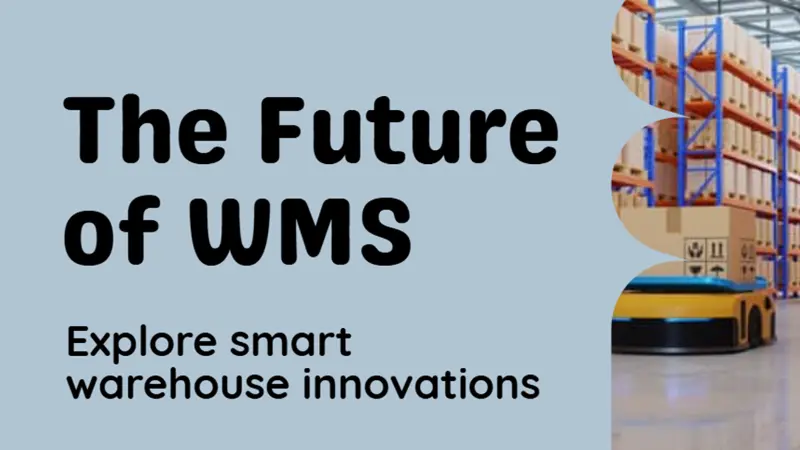
Warehouses used to be about space and labor. Now, they’re becoming intelligent ecosystems powered by software, robotics, and real-time data. I’ve seen these changes firsthand, and the future of warehouse management systems (WMS) is more transformative than most expect.
From Storage Facilities to Smart Hubs
For years, warehouses were seen as cost centers, boxes in, boxes out. The rise of ecommerce, omnichannel fulfillment, and customer expectations for lightning-fast delivery have turned them into strategic assets. The warehouse environment is evolving into an intelligent, automated, and predictive space, where advanced technologies and integrated systems are transforming traditional warehousing into a future-ready hub that proactively responds to operational needs. The future of WMS reflects that shift: from a system that just tracks inventory locations to a command hub that optimizes every movement, every process, and every decision inside the four walls, and often beyond.
The rise of ecommerce and omnichannel fulfillment has accelerated this transformation. Modern supply chains are driving the need for flexible, automated, and sustainable warehousing solutions to meet evolving demands and improve efficiency.
When I walk into a modern warehouse today, it’s not just racks and forklifts. It’s sensors, automated storage systems, and a WMS orchestrating thousands of micro-decisions in real time. Modern warehouses incorporate advanced, automated technologies such as autonomous robots, AI, and scalable storage systems to transform operations into highly efficient, data-driven environments. That’s where the industry is heading, and those not adapting will struggle to compete. The future warehouse will be shaped by advancements like AI, robotics, IoT, and sustainability, creating smarter, more adaptable hubs for the supply chain.
A WMS orchestrating thousands of micro-decisions in real-time relies on seamless integration between WMS and automation technologies, enabling real-time data sharing and smooth operation across robotics, IoT, and inventory management systems.
Slash Your Fulfillment Costs by Up to 30%
Cut shipping expenses by 30% and boost profit with Cahoot's AI-optimized fulfillment services and modern tech —no overheads and no humans required!
I'm Interested in Saving Time and MoneyThe Automation Surge
Automation is no longer a niche experiment; it’s mainstream. Robotics, automated storage and retrieval systems, autonomous mobile robots (AMRs), and conveyor automation are becoming standard features in competitive warehouses. The WMS is the brain connecting these automated systems with human workflows. Warehouse automation solutions, including AI-driven robotics and predictive analytics, are transforming warehouse operations by increasing efficiency, accuracy, and enabling proactive management.
I’ve witnessed systems where robots handle inbound pallets, AMRs shuttle goods to pickers, and conveyors route orders to the right pack station, all directed by the WMS. Automation solutions and automation technologies enable smarter, more efficient, and increasingly autonomous operations. The results were striking: reduced labor requirements, improved inventory accuracy, and faster throughput. Automation systems and automation tools help streamline operations, reduce human error, and deliver significant cost savings. According to recent industry analysis, automation adoption in warehouses is expected to double by 2027, with companies citing labor shortages and rising operational costs as key drivers. This isn’t just about replacing people; it’s about enabling operational efficiency at scale, as advanced robots like AMRs operate independently of warehouse employees, reducing the need for manual labor in transportation and operational tasks.
AI and Predictive Operations
Like other parts of the supply chain, machine learning is changing warehouse management. Predictive analytics and AI-powered systems are transforming warehouse management by enabling demand forecasting and operational optimization, allowing businesses to anticipate needs and respond proactively. AI-powered WMS platforms can forecast demand surges and pre-position inventory, dynamically adjust picking routes based on current conditions, and even predict equipment maintenance needs before breakdowns occur.
In one warehouse I consulted for, AI-driven slotting recommendations, powered by artificial intelligence and AI systems that leverage historical data and real-time information, helped optimize resource utilization and optimize operations, cutting picker travel distance by nearly 30% and saving hours per shift. Predictive maintenance alerts from IoT sensors reduced downtime dramatically. Intelligent automation, which combines robotics, machine learning, and real-time data, enables self-optimizing processes and improves efficiency. These aren’t theoretical benefits; they’re happening now, and optimizing warehouse operations through predictive analytics and AI will be essential for future competitiveness.
Real-Time Visibility Everywhere
A modern WMS provides real-time data analytics that extend beyond the warehouse walls. Integration with enterprise resource planning, transportation management systems, and other supply chain technologies enhances both inventory visibility and supply chain visibility, giving businesses a comprehensive, real-time view of inventory and operations. It connects with suppliers, carriers, and other nodes in the supply chain to give a live picture of inventory and operations. This transparency allows businesses to respond instantly to disruptions or opportunities.
For example, if a carrier delay threatens to miss a delivery window, the WMS can reprioritize picking and allocate inventory from a different distribution center. These capabilities are essential for managing global supply chains and coordinating multiple distribution centers. In the past, you might not have even known about the issue until the customer complained. Now, you can prevent the complaint altogether.
Looking for a New 3PL? Start with this Free RFP Template
Cut weeks off your selection process. Avoid pitfalls. Get the only 3PL RFP checklist built for ecommerce brands, absolutely free.
Get My Free 3PL RFPHuman-Centric Design in an Automated World
Automation doesn’t mean people disappear. In fact, the best future WMS platforms are designed to augment human workers, not replace them. Automation technologies are transforming the roles of warehouse employees, warehouse managers, and warehouse operators, changing how they interact with advanced systems and robotics on the warehouse floor. Wearables, voice-directed picking, and augmented reality interfaces are making jobs easier, faster, and safer, while also improving safety, ergonomics, and productivity on the warehouse floor. I’ve seen new employees trained in hours, not weeks, using AR-guided picking. It boosts productivity while reducing errors and fatigue, critical in a labor market where retention is a constant challenge.
Sustainability is also becoming a key design element. Modern WMS solutions optimize energy use, reduce waste, and help companies meet environmental goals. Sustainable practices, such as reducing energy consumption and optimizing space utilization and warehouse space, are becoming integral to modern warehouse management. Whether it’s minimizing travel inside the warehouse or tracking carbon impact per order, sustainability features are fast becoming part of operational excellence. Resource utilization is also improved through data-driven layout planning and automation.
Beyond Screens: The Interfaceless Warehouse
Warehouse management is shedding its reliance on traditional screens. The WMS of the future will guide work through voice commands, AR overlays, and context-aware prompts, not keyboards. Workers will receive tasks in real-time via headsets or smart glasses, confirming picks or moves verbally as they go. Supervisors will manage operations through simple commands like, “WMS, reprioritize outbound for carrier pickup in Dock 3.” Technology and automation tools, along with advanced warehouse management software, are enabling these new, intuitive interfaces for workers.
This approach slashes training time, reduces errors, and keeps teams focused on the floor, not on terminals. It’s the natural evolution of warehouse automation, pairing intelligent systems with seamless, human-friendly interfaces. As one warehouse manager told me, “Our best tech is the tech our people barely notice, it just works.”
Preparing for the Future of WMS
The future of WMS isn’t about one killer feature; it’s about a connected ecosystem where data, automation, and people work in harmony to deliver operational efficiency and customer satisfaction. Smart warehousing and future warehouses will rely on advanced inventory management, real-time inventory tracking, and the ability to optimize inventory levels to meet both customer demand and evolving customer demands.
- Invest in integration: Choose a WMS that connects seamlessly with OMS, inventory systems, and external partners; seamless integration is essential for transforming warehouse operations and ensuring that warehouses operate efficiently within modern supply chains.
- Start with targeted automation: Deploy AMRs or automated storage where ROI is clear, and scale from there.
- Leverage data actively: Use analytics, warehouse management software, and warehouse management systems to transform warehousing operations, enable real-time inventory tracking, and optimize inventory levels. Trust the insights, but validate them.
- Support your workforce: Provide tools that make their jobs easier and safer; retention and efficiency go hand in hand.
- Think network-wide: Ensure your WMS can handle multi-site operations and support distributed fulfillment models.
Warehouses will remain a critical competitive differentiator in commerce. The businesses that see their WMS as a strategic enabler, not just a system of record, will be positioned to thrive in the next decade. The future of warehouse management will be defined by the ability to adapt to evolving supply chains and leverage smart warehousing technologies.
Scaling Made Easy: Calis Books’ Fulfillment Journey
Learn how Calis Books expanded nationwide, reduced errors, grew sales while cutting headcount, and saved BIG with Cahoot
See Scale JourneyFrequently Asked Questions
What are the main trends shaping warehouse management systems?
Increased automation, AI-driven optimization, real-time visibility, human-centric design, and sustainability are leading trends.
How does AI improve WMS performance?
AI enhances slotting, labor planning, predictive maintenance, and dynamic workflow adjustments, improving efficiency and reducing costs.
Will warehouses become fully automated?
Full automation is unlikely in the near term. Expect a hybrid model where automation handles repetitive tasks, and humans focus on exceptions, quality, and complex processes.
What’s the role of real-time data in WMS?
It enables immediate decision-making, from rerouting inventory to managing disruptions, ensuring responsiveness and accuracy.
How can companies prepare for next-gen WMS?
Upgrade to integrated, cloud-based systems, invest in automation gradually, prioritize data quality, and focus on workforce enablement.
Written By:
Indy Pereira
Indy Pereira helps ecommerce brands optimize their shipping and fulfillment with Cahoot’s technology. With a background in both sales and people operations, she bridges customer needs with strategic solutions that drive growth. Indy works closely with merchants every day and brings real-world insight into what makes logistics efficient and scalable.
Turn Returns Into New Revenue
Related Articles
Retail Supply Chain & Logistics Expo New York 2026
September 30-October 1, 2026 | New York, NY Retail Supply Chain & Logistics Expo New York brings together retailers, ecommerce brands, online sellers, supply chain leaders, log...
Outliers Summit 2026
Nov 5–6, 2026 | NEW YORK, NY Outliers Summit brings ambitious founders, builders, creators, operators, and investors together in New York City for two days focused on building and ...
The Lead Summit 2026
May 20-21, 2026 | New York, NY The Lead Summit 2026 brings brand builders, retail leaders, and senior innovators together for two days in New York focused on what’s next for commer...