
The Future of Order Management Systems
In this article
 8 minutes
- From Transaction Tracker to Command Center
- AI That Anticipates, Not Just Automates
- The Rise of Distributed Order Management
- Zero-Touch Orders and Exception Management
- Voice-First, Hands-Off Order Control
- Real-Time Data for Smarter Decisions
- Preparing for the Next Wave
- Practical Takeaways for Businesses
- Frequently Asked Questions
Order management systems aren’t back-office utilities anymore. They’ve become the nerve center of modern commerce, where speed, accuracy, and customer experience converge. I’ve seen this transformation first-hand, and it’s only accelerating.
Slash Your Fulfillment Costs by Up to 30%
Cut shipping expenses by 30% and boost profit with Cahoot's AI-optimized fulfillment services and modern tech —no overheads and no humans required!
I'm Interested in Saving Time and MoneyFrom Transaction Tracker to Command Center
Order management used to mean tracking orders through a linear process: take the order, ship the order, close it out. That’s ancient history. Today’s environment demands agility across multiple channels, touchpoints, and partners. The future of order management systems (OMS) is about orchestration, not record-keeping. Modern order management software is now selected to streamline order processing, improve ecommerce operations, and integrate with customer service platforms to reduce delays and bottlenecks.
Modern OMS platforms provide real-time visibility into every order, regardless of where it originated. They handle online, in-store, marketplace, and wholesale orders seamlessly. Order entry is the crucial first step in capturing and processing customer orders, especially when customers order online, initiating the entire order tracking and fulfillment process. When I first worked on an omnichannel implementation, I realized how transformative a unified system could be. Customers could buy online and return in-store, track shipments in real-time, and get accurate delivery promises because the OMS had a live view of inventory and fulfillment options, allowing customers to access real-time inventory and order information, which enhances their overall experience. This single source of truth is becoming non-negotiable.
AI That Anticipates, Not Just Automates
The big leap forward is AI-driven intelligence. It’s no longer enough for an OMS to simply process orders efficiently. Modern systems automate and eliminate manual processes, significantly reducing the risk of human error and improving overall accuracy. The best systems now predict issues and solve them proactively.
Take order routing. Instead of static rules (“ship from warehouse closest to the customer”), AI evaluates inventory levels, shipping costs, carrier reliability, and even weather patterns to decide the optimal fulfillment plan for each order. One client I worked with shaved 12% off logistics costs simply by letting their OMS dynamically reroute orders to the most efficient fulfillment nodes. That’s not luck, that’s machine learning working in the background.
This intelligence also extends to customer satisfaction. A strong OMS will notice patterns like repeat order delays from a specific supplier or region and flag them before customers complain. Automated workflows streamline processing orders and minimize manual intervention, further reducing manual processes and the chance of human error. It can prompt proactive outreach: “We’ve identified a potential delay on your order, and here’s a faster alternative.” When you can prevent problems rather than apologize for them, you elevate the customer experience and loyalty.
The Rise of Distributed Order Management
Single-site fulfillment can’t keep up with today’s expectations. Distributed order management (DOM), sourcing and shipping from multiple locations, is becoming standard. A future-ready OMS treats inventory across warehouses, stores, and partner networks as one virtual pool, choosing the best fulfillment point automatically. It supports multiple warehouse locations and distribution centers, optimizing order fulfillment by streamlining inventory management and shipping across all sites.
This is where integration shines. When your OMS is connected to your inventory management and warehouse management systems, as well as external networks like Cahoot, it can route orders dynamically, selecting the best fulfillment center or fulfillment location for each order to ensure efficient order fulfillment. I’ve seen setups where an order placed in Chicago is fulfilled by a partner warehouse in Milwaukee for same-day delivery, without anyone manually intervening. That’s the future: speed, efficiency, and customer delight without adding complexity for the team running it.
Zero-Touch Orders and Exception Management
The dream scenario? Orders that process themselves. We’re closer than you might think. Advanced OMS platforms are reducing human intervention to the exceptions only. Standard orders, the bulk of them, flow from capture to delivery confirmation automatically. The OMS automates the fulfillment process and streamlines order fulfillment processes, ensuring efficient and accurate handling from start to finish.
I’ve experienced this shift in real-time. Early in my career, teams spent hours manually splitting orders, resolving inventory mismatches, and chasing tracking numbers. Now, modern OMS systems handle all that, minimizing human errors and optimizing the process of fulfilling orders. The role of the warehouse staff is to monitor overall health metrics and step in when something truly unusual happens. This “zero-touch” model saves labor, reduces errors, and speeds up fulfillment, all critical for competitive advantage.
Looking for a New 3PL? Start with this Free RFP Template
Cut weeks off your selection process. Avoid pitfalls. Get the only 3PL RFP checklist built for ecommerce brands, absolutely free.
Get My Free 3PL RFPVoice-First, Hands-Off Order Control
“Zero-touch” isn’t the endgame; zero-interface is. Future OMS platforms won’t just automate order flows; they’ll make managing exceptions as easy as speaking a sentence. Picture this: a major order needs rerouting due to a weather delay. Instead of diving into a dashboard, you simply say, “OMS, reroute all Chicago orders to St. Louis fulfillment for the next 48 hours”. Done. With new feature functionality, OMS platforms empower customer service teams to respond quickly and efficiently to customer needs, ensuring seamless support and adaptability as requirements evolve.
This is more than convenience, it’s about scale. When you’re processing tens of thousands of orders across multiple channels, reducing manual clicks saves hours, prevents errors, and frees your team for proactive customer work, including enabling customers to manage their orders and returns independently through self-serve options. Combined with AI-driven insights (“Three suppliers are trending late; would you like to switch sourcing?”), a zero-UI OMS becomes not just a tool, but a silent partner in delivering on customer promises.
Real-Time Data for Smarter Decisions
Like inventory management, order management thrives on real-time data analytics. Accurate, timely data enables better forecasting, resource allocation, and customer communications. A well-implemented OMS integrates seamlessly with ERP, CRM, and analytics platforms, turning order data into actionable insights. With access to customer data, sales data, and financial data, businesses can forecast inventory needs more accurately and track success across operations. You can spot trends like rising returns in a product category or underperforming carriers and act quickly.
One of my favorite features in newer OMS solutions is predictive order promising. Rather than guessing or padding delivery dates, the system calculates realistic estimates based on current inventory, capacity, and transit conditions. Customers get reliable ETAs, and businesses avoid overpromising. It’s a subtle shift that has a huge impact on trust and satisfaction.
Preparing for the Next Wave
Looking ahead, OMS platforms will continue to absorb more functionality. Expect deeper integrations with supply chain visibility tools, AI-driven fraud detection, and even sustainability modules (like carbon tracking per shipment). We’ll also see “headless” OMS models that decouple the backend logic from the front-end experience, making it easier to support new channels and interfaces. These advancements are essential for supporting business growth and meeting the evolving needs of ecommerce businesses, helping ecommerce business owners streamline operations and stay competitive.
The endgame? OMS is an intelligent hub that ensures every order, no matter how complex, is fulfilled in the fastest, most efficient, and most customer-friendly way possible, while aligning with specific business needs and supporting the scalability required for a growing ecommerce business.
Scaling Made Easy: Calis Books’ Fulfillment Journey
Learn how Calis Books expanded nationwide, reduced errors, grew sales while cutting headcount, and saved BIG with Cahoot
See Scale JourneyPractical Takeaways for Businesses
- Unify your channels: A single order management system (OMS) managing all sales channels is essential for operational efficiency and customer satisfaction.
- Evaluate and select the right order management solution: Work with order management solution vendors to choose the right order management system that fits your business needs and supports scalability.
- Integrate with accounting software: Connect your order management system OMS with accounting software to automate accounts payable, streamline invoice processing, and consolidate financial data.
- Streamline fulfillment and reduce shipping delays: Use your OMS to streamline fulfillment, optimize the order fulfillment process, and minimize shipping delays for timely delivery and improved customer satisfaction.
- Leverage third-party logistics and multiple sales channels: Enhance your order management process and order processing by integrating third-party logistics providers and managing inventory across various sales channels.
- Adopt AI-powered routing: Start leveraging OMS platforms with intelligent routing to cut costs and improve delivery speed and delivery timelines.
- Plan for distributed fulfillment: Integrate your OMS with partners and multiple locations for faster, more flexible delivery.
- Automate the routine: Configure your OMS to handle standard processes autonomously so your team can focus on exceptions and strategy.
- Focus on data quality: Real-time insights depend on clean, consistent data across systems; invest in getting it right.
Order management isn’t just a back-end function anymore. It’s a direct driver of customer experience, efficiency, and growth. The future belongs to businesses that treat OMS as a strategic asset and equip it with the intelligence and reach to deliver on that promise. Order management systems typically include features to track orders, manage the order process, and ensure efficient delivery timelines, making them essential for modern ecommerce and retail operations.
Frequently Asked Questions
What are the key trends shaping the future of order management systems?
Omnichannel integration, AI-driven routing, distributed order management, real-time data analytics, and increasing automation are the major trends.
How does AI improve order management?
It enables smarter routing, predictive order promising, proactive issue detection, and automation of routine tasks, reducing costs and boosting customer satisfaction.
What is distributed order management?
It’s the ability to fulfill orders from multiple locations, treating all inventory sources as a single virtual pool for faster, more efficient delivery.
How does OMS impact customer satisfaction?
By ensuring accurate inventory visibility, reliable delivery estimates, proactive communication, and flexible fulfillment options.
What should companies do now to prepare for the future of OMS?
Implement a unified, AI-capable OMS, integrate it with other core systems, automate routine tasks, and build partnerships for distributed fulfillment.
Written By:

Indy Pereira
Indy Pereira helps ecommerce brands optimize their shipping and fulfillment with Cahoot’s technology. With a background in both sales and people operations, she bridges customer needs with strategic solutions that drive growth. Indy works closely with merchants every day and brings real-world insight into what makes logistics efficient and scalable.

Turn Returns Into New Revenue

Related Articles
Retail Supply Chain & Logistics Expo New York 2026
September 30-October 1, 2026 | New York, NY Retail Supply Chain & Logistics Expo New York brings together retailers, ecommerce brands, online sellers, supply chain leaders, log...

Outliers Summit 2026
Nov 5–6, 2026 | NEW YORK, NY Outliers Summit brings ambitious founders, builders, creators, operators, and investors together in New York City for two days focused on building and ...

The Lead Summit 2026
May 20-21, 2026 | New York, NY The Lead Summit 2026 brings brand builders, retail leaders, and senior innovators together for two days in New York focused on what’s next for commer...
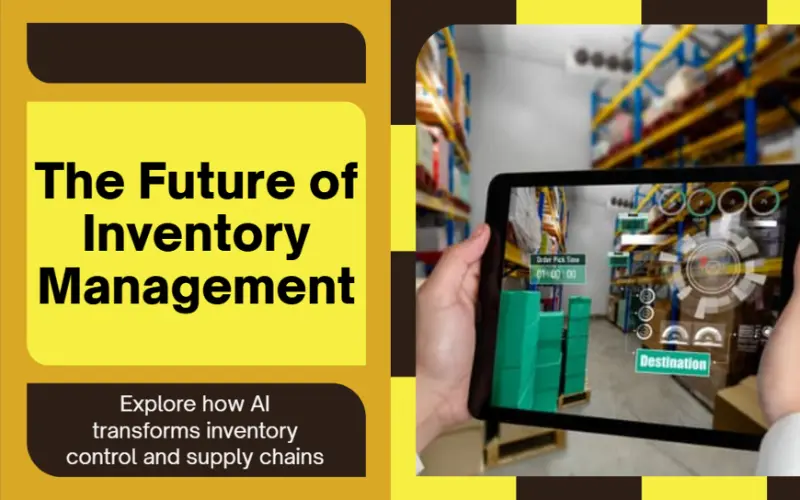
The Future of Inventory Management Software
In this article
7 minutes
- From Counting Boxes to Predicting Demand
- HerAutomation That Stays Out of Your Waye
- Balancing Just-in-Time and Just-in-Case
- AI-Driven Operational Excellence
- The Invisible Interface: When Inventory Runs Itself
- The Data Layer: Real-Time, Everywhere
- Sustainability and the Human Factor
- Practical Takeaways for the Next Era
- Frequently Asked Questions
Inventory management software isn’t just tracking stock anymore. It’s becoming a predictive, automated, and quietly powerful force reshaping how we run supply chains. I’ve seen this shift up close, and it’s changing everything about how we manage inventory.
From Counting Boxes to Predicting Demand
Inventory management used to be simple: keep count, reorder when you run low, avoid the occasional stockout. That mindset doesn’t cut it anymore. Demand is unpredictable, supply chains are fragile, and customers expect “available now” at every touchpoint. The future of inventory management is predictive, not reactive.
I’ve watched AI-driven systems evolve from “nice-to-have analytics” to core operational engines. They don’t just show you inventory levels, they forecast demand weeks ahead by analyzing historical data, market trends, and even external factors like weather or influencer-driven social spikes. Retailers I’ve worked with are using predictive analytics to fine-tune replenishment, avoiding both stockouts and the drag of excess inventory. The real kicker? These systems learn as they go, getting sharper every season.
Slash Your Fulfillment Costs by Up to 30%
Cut shipping expenses by 30% and boost profit with Cahoot's AI-optimized fulfillment services and modern tech —no overheads and no humans required!
I'm Interested in Saving Time and MoneyAutomation That Stays Out of Your Way
The other big change: automation is becoming invisible. Nobody wants to micromanage replenishment orders or track inventory movement across multiple locations. Modern cloud based inventory systems handle that in the background. They create purchase orders, trigger warehouse transfers, and update sales channels automatically. You only hear from them when something’s wrong, like a supplier delay or a sudden demand spike.
This shift toward “zero-touch” inventory management is huge. I remember when daily inventory check-ins were a full-time job; now, advanced systems integrate directly with warehouse operations, ERP platforms, and even collaborative networks like Cahoot. If a warehouse in Texas has too much of a SKU and a Northeast DC is running low, the system can handle the transfer on its own. Less manual work, fewer errors, better customer satisfaction.
Balancing Just-in-Time and Just-in-Case
COVID-19 blew up the myth that lean inventory is always best. Businesses running purely just-in-time strategies got burned when supply chains faltered. The future lies in smarter inventory optimization, carrying enough buffer stock for resilience without sinking cash into overstock.
Today’s inventory management systems help you find that balance dynamically. They monitor supplier lead times, market conditions, and risk factors in real time, adjusting safety stock automatically. One fashion brand I’ve seen uses these tools to front-load seasonal items just enough to hedge against shipping delays, but not so much that they’re sitting on dead stock come spring. This kind of supply chain transparency and agility is where the competitive edge lives.
AI-Driven Operational Excellence
Machine learning isn’t just about forecasting; it’s improving every part of inventory management processes. Systems can now detect anomalies in inventory records (think mis-scanned pallets or missing raw materials) before they spiral into bigger problems. They optimize warehouse processes by recommending optimal slotting for high-velocity items, cutting picker travel time and costs. And they flag inefficient inventory-related tasks that waste labor.
Operational excellence in inventory management means more than cutting costs; it’s about speed, accuracy, and delivering on customer demand. Businesses that get this right see significant cost savings and improved customer satisfaction, which feeds directly into growth. If your software isn’t surfacing insights like “Item A is trending up, move it closer to outbound” or “Supplier B’s lead times are slipping, increase buffer,” you’re behind.
The Invisible Interface: When Inventory Runs Itself
The next leap isn’t just smarter software, it’s software that doesn’t need you staring at dashboards. Inventory systems are heading toward what I call a “zero-UI” experience. Instead of logging in daily to tweak reorder points, AI agents will work silently in the background, continuously analyzing historical data, current demand, and supply chain disruptions. You’ll only get a notification when action is truly required, like a supplier outage that threatens a key SKU.
This doesn’t mean losing control; it means shifting your role from button-pusher to decision-maker. Imagine saying, “System, show me this week’s high-risk items” and getting an instant, contextual answer. That’s where voice interfaces and AI explainability come in, you’ll trust these systems because they’ll tell you, in plain language, why they made a move. The most advanced cloud-based inventory systems already flirt with this capability. Soon, it will be standard.
Looking for a New 3PL? Start with this Free RFP Template
Cut weeks off your selection process. Avoid pitfalls. Get the only 3PL RFP checklist built for ecommerce brands, absolutely free.
Get My Free 3PL RFPThe Data Layer: Real-Time, Everywhere
Data is the foundation of modern inventory control. Real-time data analytics are no longer optional. IoT sensors in warehouses track inventory movement continuously. RFID tags give instant visibility across multiple locations. Cloud-based platforms integrate all that data into one live view, no more reconciling spreadsheets across departments.
This real-time layer enables better decisions everywhere. Marketing can plan promotions with confidence, knowing inventory status is accurate. Finance can forecast cash flow without guessing. Operations can reroute stock instantly when demand shifts. And with advanced algorithms, these systems aren’t just reporting data, they’re making sense of it, recommending actions that optimize inventory levels and overall operational efficiency.
Sustainability and the Human Factor
The future of inventory management isn’t only about efficiency; it’s also about responsibility. Modern systems are incorporating environmental monitoring, helping companies reduce waste, cut their carbon footprint, and align with sustainability goals. Think smarter replenishment to avoid expired goods, or optimized transport to minimize miles.
At the same time, minimal human intervention doesn’t mean no human oversight. The best systems keep people in the loop where it matters, strategy, exceptions, customer relationships, while handling the grunt work automatically. That’s the sweet spot: technology that empowers, not replaces.
Practical Takeaways for the Next Era
For anyone managing inventory today, here’s where to focus:
- Upgrade to cloud based inventory systems with robust integration. Legacy platforms can’t deliver real-time data or automation at scale.
- Use machine learning to improve forecasting and reduce excess inventory. Even a pilot can show quick wins.
- Reevaluate your inventory optimization strategy. Don’t rely solely on JIT; build resilience into your inventory levels.
- Prioritize data accuracy. Garbage in, garbage out, clean inventory data is the backbone of any system.
- Look beyond your four walls. Connect with partners, distribution centers, and networks like Cahoot to extend your reach without heavy investment.
The future of inventory management software isn’t about dashboards and manual processes. It’s about systems that quietly deliver operational excellence, let you manage inventory across multiple locations effortlessly, and give you a genuine competitive edge. I’ve seen companies transform their business by embracing these tools, and I believe that in a few years, they won’t be optional. They’ll be the standard.
Scaling Made Easy: Calis Books’ Fulfillment Journey
Learn how Calis Books expanded nationwide, reduced errors, grew sales while cutting headcount, and saved BIG with Cahoot
See Scale JourneyFrequently Asked Questions
What are the most important inventory management trends right now?
Predictive analytics, real-time visibility, and automation are leading. Companies are using AI to forecast demand, IoT to track inventory live, and cloud platforms to integrate operations across multiple locations.
How can AI improve inventory management?
AI helps forecast customer demand, optimize inventory levels, and automate repetitive tasks like replenishment and transfers, reducing human error and improving efficiency.
What’s the role of cloud-based inventory systems?
They provide a single, accurate view of inventory data across the business, enable real-time updates, and integrate seamlessly with other systems like OMS and WMS.
Should businesses still use just-in-time inventory?
Pure JIT is risky. The trend is toward balanced inventory optimization, lean where you can, buffered where you must, guided by real-time data and analytics.
How can inventory management software support sustainability?
By optimizing stock levels to reduce waste, improving transport efficiency, and providing transparency for sustainable sourcing and operations.
Written By:
Indy Pereira
Indy Pereira helps ecommerce brands optimize their shipping and fulfillment with Cahoot’s technology. With a background in both sales and people operations, she bridges customer needs with strategic solutions that drive growth. Indy works closely with merchants every day and brings real-world insight into what makes logistics efficient and scalable.
Turn Returns Into New Revenue
Related Articles
Retail Supply Chain & Logistics Expo New York 2026
September 30-October 1, 2026 | New York, NY Retail Supply Chain & Logistics Expo New York brings together retailers, ecommerce brands, online sellers, supply chain leaders, log...
Outliers Summit 2026
Nov 5–6, 2026 | NEW YORK, NY Outliers Summit brings ambitious founders, builders, creators, operators, and investors together in New York City for two days focused on building and ...
The Lead Summit 2026
May 20-21, 2026 | New York, NY The Lead Summit 2026 brings brand builders, retail leaders, and senior innovators together for two days in New York focused on what’s next for commer...
The Future of SaaS: From Feature Wars to Invisible Intelligence
The SaaS world is changing faster than most of us realize. For years, software companies competed in feature wars, packing in dashboards, toggles, and modules like they were stocking a buffet. The SaaS model has historically dominated the software industry, driving the ongoing SaaS revolution that continues to transform how businesses operate. Now? Businesses don’t want more features. They want results. They’re done with juggling complex tools; they want outcomes, automation, and systems that just work.
At Cahoot, working with ecommerce brands every day, we see this shift up close. Retailers are tired of logging into five different apps to ship a single order or analyze a single metric. Unlike traditional software, which required on-premise installation and significant upfront investment, cloud-based SaaS has enabled scalable, accessible solutions delivered over the internet. They want software that solves problems quietly, without adding to their workload. This shift is not only changing how software is delivered, but is also reshaping the overall SaaS landscape and business model for software companies. That’s where SaaS is heading: from feature-heavy to invisible intelligence, AI-powered systems that deliver results in the background.
Slash Your Fulfillment Costs by Up to 30%
Cut shipping expenses by 30% and boost profit with Cahoot's AI-optimized fulfillment services and modern tech —no overheads and no humans required!
I'm Interested in Saving Time and MoneyFrom Features to Outcomes: SaaS Grows Up
The feature-first era was inevitable. Competition exploded, and SaaS providers fought to stand out by adding more and more. It worked for a while. But now, the market is saturated. Enterprise buyers face dozens of options for every function. Most use only a fraction of the tools they pay for. Current SaaS trends show that, to stay competitive, companies are evolving their pricing models, moving away from the traditional pricing model toward more flexible, outcome-based pricing models that better align with customer value. The question isn’t “Which software has the most features?” anymore; it’s “Which solution gets me the result with the least effort?”
This is the evolution of SaaS: from tools to services, from dashboards to deliverables. The best SaaS companies today measure success not by logins, but by outcomes, higher conversion rates, lower churn, and faster operations. Reducing customer churn and improving customer retention are now key business outcomes for SaaS companies, and innovative revenue models are being adopted to support these goals. And the ones that can’t prove that? They’ll lose.
Recent research backs this up: 90% of enterprise buyers expect AI-driven functionality in their SaaS tools, and AI-enhanced products are growing revenue 10% faster than their traditional counterparts. As revenue growth rates slow across the industry, new pricing models and revenue models are directly impacting business outcomes and helping companies maintain a competitive edge. In short, outcome-driven SaaS isn’t a trend; it’s table stakes.
The Rise of AI-Driven, Invisible Software
We’re entering the age of “zero UI”, or more accurately, invisible UI. Instead of training employees to master endless dashboards, AI agents handle the work and surface only what matters. Artificial intelligence, with its advanced AI capabilities and sophisticated AI models, is the driving force behind this transformation, enabling software to operate autonomously and intelligently.
Picture an ecommerce ops manager today: they log into a shipping app, check carrier rates, process orders, and handle exceptions. In tomorrow’s SaaS world, they don’t log in at all. The system automatically selects the best carriers, schedules pickups, and sends alerts only if something goes wrong. The software is invisible, but the results are very visible: lower costs, on-time deliveries, happier customers. In this future, AI tools and AI-driven solutions will automate processes (and automate workflows), leveraging machine learning to generate insights and streamline software development for even greater efficiency.
This shift is already happening. AI copilots are appearing in everything from CRMs to project management tools, and they’re evolving into full AI agents capable of executing tasks autonomously. It’s a tech revolution. And it’s going to redefine what “software” even means. The rise of no-code platforms is also democratizing software development in the SaaS industry, empowering more users to build and automate workflows without traditional programming.
Looking for a New 3PL? Start with this Free RFP Template
Cut weeks off your selection process. Avoid pitfalls. Get the only 3PL RFP checklist built for ecommerce brands, absolutely free.
Get My Free 3PL RFPTrust, Transparency, and Control
With invisible intelligence comes a new challenge: trust. If software is making decisions behind the scenes, approving refunds, reallocating inventory, users need confidence that it’s doing the right thing. Security concerns are paramount, as risks such as data breaches highlight the need to protect sensitive data (e.g., customer data) from unauthorized access and cyber threats.
The future belongs to SaaS platforms that balance automation with transparency. That means:
- Providing simple, plain-language explanations for AI-driven actions (“Shifted 200 units to avoid stockout based on forecasted demand”).
- Allowing selective oversight, logs, override options, and compliance safeguards.
- Ensuring data security and bias mitigation to build long-term trust.
- Implementing robust network security and secure cloud infrastructure to safeguard business data and maintain compliance.
In ecommerce and logistics, this is critical. Brands will only rely on AI to run fulfillment or manage customer interactions if they can see that the system is accurate, secure, and aligned with their goals.
Vertical SaaS: Smarter by Design
The shift to invisible, outcome-first SaaS is accelerating the rise of vertical SaaS, industry-specific platforms that deliver deep, tailored value. Generic tools can’t match the precision of a solution built for your exact challenges, especially when AI is layered in. Vertical SaaS solutions leverage business intelligence, data intelligence, and cloud-based solutions to address specific customer needs, enabling organizations to operate more efficiently and make smarter decisions.
We’re already seeing vertical SaaS leaders in ecommerce fulfillment, healthcare, and finance outperform broad, horizontal platforms. Why? Because domain-specific AI can optimize in ways generic software can’t. Cloud computing, customer experience, and customer engagement are central to these advancements, ensuring that SaaS solutions deliver maximum value through seamless integration and real-time responsiveness. For example, an AI-driven shipping platform can anticipate carrier rate changes, reroute shipments preemptively, and minimize costs automatically. That’s the kind of invisible intelligence ecommerce brands are asking for, and the kind Cahoot is building into our own solutions. Customer relationship management and creating exceptional customer experiences are now essential for vertical SaaS providers to drive loyalty and long-term growth.
Too Many Tools? AI Could Be the Fix
Ironically, while SaaS aims to simplify, businesses have never had more tools. Many manage dozens, sometimes hundreds, of separate applications. This leads to data silos, wasted spend, and operational drag. The complexity of managing diverse tech stacks and fragmented SaaS applications creates additional challenges for organizations seeking streamlined workflows and effective digital transformation.
AI could be the unifier. Instead of humans stitching everything together, intelligent agents will coordinate across multiple systems, pulling data, triggering actions, and delivering outcomes seamlessly. APIs will become the backbone; AI will be the brain. This integration not only improves operational efficiency but also supports business success by enabling proactive management and better customer outcomes. For ecommerce, that might mean one integrated solution managing orders, inventory, shipping, and returns with minimal human touch, replacing a patchwork of disconnected apps.
As the SaaS landscape evolves, business models of SaaS vendors are shifting, with the rise of micro SaaS targeting niche needs and impacting both public SaaS companies and broader SaaS businesses.
The Road Ahead: Adapt or Fall Behind
SaaS isn’t disappearing. It’s becoming something more powerful and more invisible. The winners will be those who combine AI’s adaptability with SaaS’s reliability, delivering measurable results without adding complexity. This reflects an ongoing paradigm shift in the SaaS market, where AI-driven solutions and innovative SaaS products are redefining how organizations operate and deliver maximum value.
For businesses, the takeaway is clear: start evaluating your tools not by how many features they have, but by how little work they leave for you. Leverage business data to drive better business outcomes, as highlighted in recent market research from Fortune Business Insights. Pilot AI-driven capabilities. Demand transparency and vertical expertise. And prepare for a world where software works quietly in the background, letting you focus on strategy, not screens.
Looking ahead, the growing importance of sustainable practices and achieving net-zero residual emissions will play a key role in shaping the future of SaaS.
Frequently Asked Questions
What Is “Invisible” SaaS and Why Does It Matter?
Invisible SaaS refers to AI-powered software that operates in the background, handling tasks automatically and surfacing only results. It matters because it reduces complexity and improves outcomes without adding to users’ workloads.
Will AI Replace Traditional SaaS Platforms?
Not entirely. AI will augment and automate many SaaS functions, but core platforms will remain as secure, reliable backbones. The future is AI-enhanced SaaS, not AI-only.
How Can Ecommerce Brands Prepare for This Shift?
Audit where you’re spending time on manual processes, test AI-enabled features from your current providers, and focus on tools that demonstrate real, measurable results.
Why Is Vertical SaaS Becoming More Important?
Industry-specific solutions with embedded AI can deliver better outcomes than generic platforms by leveraging domain expertise and tailored automation.
What Risks Should Businesses Watch in AI-Driven SaaS?
Watch for data security, transparency, and potential bias in AI decisions. Choose vendors with clear safeguards, compliance certifications, and explainable AI practices.
Written By:
Indy Pereira
Indy Pereira helps ecommerce brands optimize their shipping and fulfillment with Cahoot’s technology. With a background in both sales and people operations, she bridges customer needs with strategic solutions that drive growth. Indy works closely with merchants every day and brings real-world insight into what makes logistics efficient and scalable.
Turn Returns Into New Revenue
Related Articles
Retail Supply Chain & Logistics Expo New York 2026
September 30-October 1, 2026 | New York, NY Retail Supply Chain & Logistics Expo New York brings together retailers, ecommerce brands, online sellers, supply chain leaders, log...
Outliers Summit 2026
Nov 5–6, 2026 | NEW YORK, NY Outliers Summit brings ambitious founders, builders, creators, operators, and investors together in New York City for two days focused on building and ...
The Lead Summit 2026
May 20-21, 2026 | New York, NY The Lead Summit 2026 brings brand builders, retail leaders, and senior innovators together for two days in New York focused on what’s next for commer...
UglyTalk NYC

August 20, 2025 | New York, NY
Building Profitable eCommerce in a Downward Market Join Cahoot CEO Manish Chowdhary and a panel of bold ecommerce operators for a no-fluff conversation on what’s actually working in 2025.
This Ugly Talk is all about honesty: real numbers, real failures, and what it takes to thrive when growth isn’t easy. Whether you’re VC-backed or bootstrapped, DTC or multichannel—this event is for founders who are still standing and still pushing. Free admission. Seats are limited—register early.
Slash Your Fulfillment Costs by Up to 30%
Cut shipping expenses by 30% and boost profit with Cahoot's AI-optimized fulfillment services and modern tech —no overheads and no humans required!
I'm Interested in Saving Time and Money
Turn Returns Into New Revenue
Related Articles
Retail Supply Chain & Logistics Expo New York 2026
September 30-October 1, 2026 | New York, NY Retail Supply Chain & Logistics Expo New York brings together retailers, ecommerce brands, online sellers, supply chain leaders, log...
Outliers Summit 2026
Nov 5–6, 2026 | NEW YORK, NY Outliers Summit brings ambitious founders, builders, creators, operators, and investors together in New York City for two days focused on building and ...
The Lead Summit 2026
May 20-21, 2026 | New York, NY The Lead Summit 2026 brings brand builders, retail leaders, and senior innovators together for two days in New York focused on what’s next for commer...
Xcelerate NYC (2025)

September 10, 2025 | New York, NY
Xcelerate NYC, hosted by Fastly, is an event designed to help attendees learn about the latest innovations in digital transformation, network with industry leaders, and gain insights into cutting-edge technologies. It offers a chance to connect with Fastly experts, hear from customer success stories, and explore the future of the internet.
Whether you’re focused on boosting performance, leveraging cutting-edge technologies to maximize your ROI, or enhancing cyber security, our event is packed with valuable takeaways! This is a great opportunity to meet other developers, security and network engineering professionals for a day of knowledge sharing and networking
Slash Your Fulfillment Costs by Up to 30%
Cut shipping expenses by 30% and boost profit with Cahoot's AI-optimized fulfillment services and modern tech —no overheads and no humans required!
I'm Interested in Saving Time and Money
Turn Returns Into New Revenue
Related Articles
Retail Supply Chain & Logistics Expo New York 2026
September 30-October 1, 2026 | New York, NY Retail Supply Chain & Logistics Expo New York brings together retailers, ecommerce brands, online sellers, supply chain leaders, log...
Outliers Summit 2026
Nov 5–6, 2026 | NEW YORK, NY Outliers Summit brings ambitious founders, builders, creators, operators, and investors together in New York City for two days focused on building and ...
The Lead Summit 2026
May 20-21, 2026 | New York, NY The Lead Summit 2026 brings brand builders, retail leaders, and senior innovators together for two days in New York focused on what’s next for commer...
Brooklyn Tech Expo: FALL4AI Edition

October 07, 2025 | New York, NY
Organized by Pulse NYC, the Brooklyn Tech Expo “FALL4AI” Edition is Brooklyn’s largest tech conference in the prime Dumbo location. This high-energy expo focuses on AI and cutting-edge technology, bringing together Brooklyn’s thriving tech and business communities for a day of innovation, networking, and learning.
With over 1,000 professionals expected – including C-level execs, founders, and industry leaders – come engage with innovative companies and exhibitors showcasing impactful tech.
Slash Your Fulfillment Costs by Up to 30%
Cut shipping expenses by 30% and boost profit with Cahoot's AI-optimized fulfillment services and modern tech —no overheads and no humans required!
I'm Interested in Saving Time and Money
Turn Returns Into New Revenue
Related Articles
Retail Supply Chain & Logistics Expo New York 2026
September 30-October 1, 2026 | New York, NY Retail Supply Chain & Logistics Expo New York brings together retailers, ecommerce brands, online sellers, supply chain leaders, log...
Outliers Summit 2026
Nov 5–6, 2026 | NEW YORK, NY Outliers Summit brings ambitious founders, builders, creators, operators, and investors together in New York City for two days focused on building and ...
The Lead Summit 2026
May 20-21, 2026 | New York, NY The Lead Summit 2026 brings brand builders, retail leaders, and senior innovators together for two days in New York focused on what’s next for commer...
Top Benefits of Implementing AI in Supply Chain Management
In this article
12 minutes
- Key Takeaways
- Understanding AI in Supply Chain Management
- How AI Works in Supply Chains
- Key Benefits of AI in Supply Chain Operations
- Cost Savings and Operational Efficiency
- Enhancing Supply Chain Visibility and Transparency
- AI-Powered Risk Management in Supply Chains
- Preparing Your Supply Chain for AI Implementation
- Challenges and Considerations in AI Adoption
- Real-World Applications in Supply Chain Management
- Summary
- Frequently Asked Questions
Artificial intelligence is changing the game for supply chain management by automating manual tasks, increasing visibility, and powering smarter, faster decision-making. AI-driven tools are helping companies forecast demand more accurately, optimize inventory levels, reduce waste, and respond quickly to disruptions. From intelligent routing and predictive analytics to warehouse robotics and automated order fulfillment, AI is enabling more agile and resilient supply chains. This article explores the biggest benefits of AI and why it’s becoming a must-have for modern supply chain leaders
Key Takeaways
- AI revolutionizes supply chain management by improving demand forecasting, inventory management, and warehouse efficiency, leading to streamlined operations.
- Integrating AI enhances cost savings and operational efficiency, with companies achieving significant reductions in delivery times and logistics costs.
- Successful AI implementation in supply chains relies on a strategic roadmap, high-quality data, and skilled personnel to overcome challenges and maximize benefits.
Understanding AI in Supply Chain Management
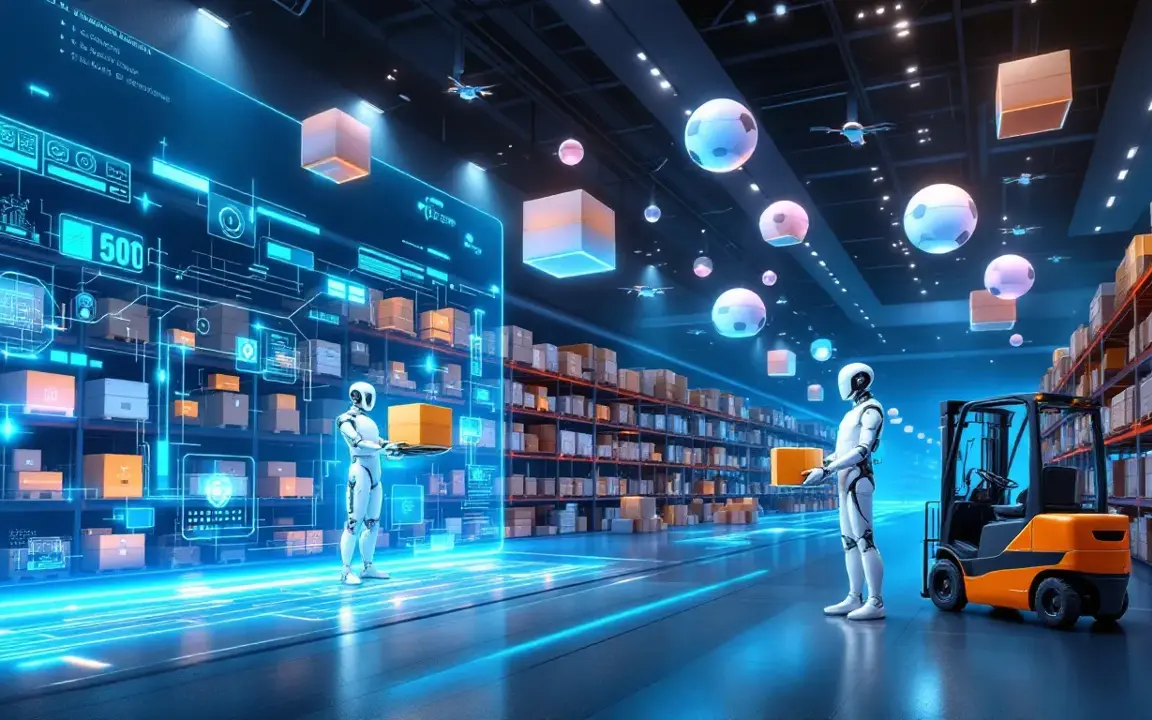
Artificial intelligence is a game-changer for supply chain management, offering capabilities that were once unimaginable. AI allows supply chains to enhance demand forecasting, optimize inventory management, and improve warehouse efficiency. AI helps streamline workflows, optimize routes, and improve procurement, minimizing shortages and automating tasks end-to-end.
Furthermore, AI-driven predictive analytics aid supply chain managers in making more accurate sales forecasts based on market trends and scenarios. Companies like HAVI are already using AI for planning, optimization, sourcing, and data management, showcasing the immense potential of AI in supply chain solutions.
Slash Your Fulfillment Costs by Up to 30%
Cut shipping expenses by 30% and boost profit with Cahoot's AI-optimized fulfillment services and modern tech —no overheads and no humans required!
I'm Interested in Saving Time and MoneyHow AI Works in Supply Chains
AI operates in supply chains through sophisticated machine learning models and intelligent algorithms that dynamically analyze data to identify inefficiencies and optimize workflows in real-time. Automating repetitive tasks with AI minimizes human errors and boosts overall efficiency. Machine learning algorithms forecast customer demand, discover patterns, and improve the workflow of supply chain operations.
Additionally, AI-driven tools simulate various supply chain scenarios, empowering businesses to make swift and informed decisions. The collaboration among supply chain partners is also improved, ensuring all stakeholders have access to real-time data.
Key Benefits of AI in Supply Chain Operations
The integration of AI in supply chain operations brings a plethora of benefits that transform how supply chains function. AI enhances demand forecasting, optimizes inventory management, and significantly improves warehouse efficiency. AI ensures more efficient supply chain processes by monitoring product quality, optimizing inventory levels, and identifying efficient delivery routes.
AI-powered simulations provide supply chain managers with insights into complex operations, enabling the improvement of logistics networks and reducing errors in supply chain activities.
Enhanced Demand Forecasting
AI introduces predictive analytics that offer precise and actionable insights to demand forecasting. AI helps firms gauge market demand and customer sentiment by analyzing data from diverse sources, including point-of-sale locations, social media, and news data feeds. Machine learning algorithms discover patterns in data, improving demand forecasting accuracy and enabling rapid adjustments to market changes.
Advanced AI tools incorporate external data sources like weather patterns and macroeconomic trends to provide more accurate predictions, significantly enhancing supply chain planning.
Optimized Inventory Management
AI optimizes inventory management by analyzing data to determine the optimal levels of raw materials and finished products needed at various locations and times, aligning inventory management with demand forecasts. Real-time monitoring through AI helps avoid both excess inventory and stock shortages, thereby reducing unnecessary costs.
C3 AI’s Inventory Optimization manages inventory levels in real-time using advanced machine learning algorithms to provide stocking recommendations, demonstrating the substantial impact of AI on inventory management.
Improved Warehouse Efficiency
AI enhances warehouse efficiency by optimizing layouts, planning optimal pick routes for workers and robots, and improving inventory balancing against carrying costs. AI ensures efficient shipment management by considering factors such as order volumes, delivery promises, and contractual deadlines.
Companies like Logiwa use AI in their warehouse and inventory management software to enhance efficiency, accuracy, and decision-making capabilities. AI integration leads to significant cost reductions and improved operational efficiency in warehouse operations.
Looking for a New 3PL? Start with this Free RFP Template
Cut weeks off your selection process. Avoid pitfalls. Get the only 3PL RFP checklist built for ecommerce brands, absolutely free.
Get My Free 3PL RFPCost Savings and Operational Efficiency
The integration of AI into supply chains yields significant operational cost savings and enhances overall productivity. AI streamlines operations by providing unparalleled visibility into supply chain activities, identifying inefficiencies, and mitigating bottlenecks.
Examples of cost savings include a global consumer goods company that reduced delivery times by 30% through AI-powered route optimization, achieving significant cost savings in the process. The implementation of AI can significantly boost operational efficiency, with some companies reporting up to a 22% improvement.
Reduced Operating Costs
AI reduces operating costs by automating repetitive tasks and improving machinery performance. By minimizing human errors and addressing inefficiencies, AI enhances overall operational efficiency. AI also facilitates the accuracy of documentation processes, helping predict equipment malfunctions and ensuring smoother operations.
The combined effect of these AI capabilities leads to significant cost savings in supply chain management.
Lower Logistics Costs
AI lowers logistics costs by optimizing transportation routes and analyzing environmental factors like traffic and weather to suggest alternative shipping routes. This optimization can reduce transportation expenses by as much as 30%.
Uber Freight, for example, has reduced empty miles for trucks by algorithmically designing optimal routes, leading to substantial cost savings. Early adopters of AI-enabled supply chain management have reported a 15% reduction in logistics costs, demonstrating the significant impact of AI on logistics networks.
Enhancing Supply Chain Visibility and Transparency
AI enhances visibility in supply chains by allowing firms to monitor inventory and respond to disruptions in real time. By rapidly analyzing large data sets, AI enhances supply chain transparency, helping organizations make better-informed decisions and optimize their supply chain processes.
Major companies use AI to enhance supplier selection by analyzing performance metrics and user feedback to identify ethical and sustainable partners. Improved visibility and transparency through AI lead to more efficient and sustainable supply chain operations.
Real-Time Data Analysis
AI systems enhance real-time tracking capabilities, allowing for better management of inventory levels and the movement of goods. By continuously monitoring supply chain metrics, AI enables proactive adjustments based on real-time data.
AI-powered supply chain systems enhance logistics efficiency by optimizing delivery routes based on real-time data and predictive analytics. This continuous monitoring and real-time data analysis improve resource allocation and lead to faster delivery times.
Ethical Sourcing and Sustainability
AI promotes ethical sourcing and sustainability by analyzing market trends and environmental data, enabling companies to make more informed sourcing decisions that align with sustainability goals. AI enhances transparency in sourcing by tracking product origins and ensuring compliance with ethical standards.
AI contributes to more sustainable supply chain operations by supporting material reuse and recycling.
AI-Powered Risk Management in Supply Chains
AI enhances risk management in supply chains by forecasting potential disruptions using a range of data inputs. AI-powered risk management tools help businesses identify potential supply chain disruptions from geopolitical events or natural disasters before they escalate.
Companies like Coyote Logistics use AI and machine learning to predict supply chain issues before they occur, enhancing supply chain resilience. AI tools significantly improve operational efficiency and reduce delays by swiftly detecting disruptions and facilitating effective response strategies.
Preparing Your Supply Chain for AI Implementation
Preparing your supply chain for AI implementation involves several critical steps, including vendor selection, system integration, testing, and employee training. Organizations must assess their current systems to identify areas where AI can enhance efficiency and effectiveness. Developing a strategic roadmap that aligns with business objectives and addresses specific supply chain challenges is essential.
Choosing the right AI vendors and ensuring secure integration are important for successful implementation.
Assessing Current Systems
Start by evaluating existing supply chain systems and logistics networks to identify pain points and improvement opportunities to determine how AI can help. Cross-functional teams, including expertise from IT, data science, and business sectors, can improve AI project alignment. Accessibility to diverse and high-quality data is essential for effective AI integration.
Developing a Strategic Roadmap
Develop a strategic roadmap for guiding the implementation of AI and ensuring alignment with business objectives. Establish a clear strategy and roadmap for modernizing the supply chain with AI technologies, ensuring that it addresses specific global supply chain challenges and aligns with overall business goals.
Vendor Selection and Integration
Selecting the right AI vendors involves assessing their technical expertise, compatibility with existing systems, and potential for scalability. Carefully consider the technical capabilities and support models of the vendors on the short list when selecting AI solutions.
Implement encryption and secure access controls to safeguard data during AI integration. Robust security measures are necessary to protect sensitive data and reduce privacy risks.
Challenges and Considerations in AI Adoption
Adopting AI in supply chains comes with challenges and considerations that must be addressed to ensure successful implementation. These include financial investment, operational challenges, and the need for skilled personnel. Plan thoroughly to minimize operational disruptions during AI integration.
Implement a change management strategy and communication protocol to overcome resistance and ensure smooth AI adoption. Adopting a clear vision and defined goals is essential for successful AI integration in supply chains.
Data Quality and Availability
High-quality data is crucial for the effective implementation of AI in supply chain management. Organizations often face challenges related to data quality and availability when integrating AI into their supply chains. Inaccurate data can lead to misinformation, posing significant risks to decisions.
Ensuring successful AI adoption requires companies to first focus on improving data quality and maintaining reliable data sources.
Skilled Personnel and Training
The fast pace of AI development has led to a shortage of personnel with specialized skills, creating a pressing need for training and development programs. Effective AI adoption requires investing in employee training programs to enhance skills related to AI technologies.
Supply chain professionals must continuously update their knowledge and capabilities to keep up with the evolving landscape of AI in supply chains.
Privacy and Security Concerns
AI systems can raise data privacy concerns, especially with the extensive data transfers and access needed for integration. Address privacy and security concerns early in the project to ensure the effective implementation of AI in supply chain management. Implementing robust security protocols and adhering to privacy regulations can help mitigate data privacy concerns associated with AI systems.
Real-World Applications in Supply Chain Management
Amazon: Utilizes AI to manage its vast inventory, predict product demand, and optimize delivery routes, ensuring swift and efficient service.
Walmart: Employs AI for demand forecasting and inventory management, reducing excess stock and improving product availability.
Coca-Cola: Uses AI to streamline its supply chain operations, from procurement to distribution, enhancing overall efficiency, and relies on AI-powered chatbots to reduce the cost of customer service.
Leveraging AI in ecommerce supply chains enables businesses to enhance their supply chain visibility, reduce costs, and improve overall efficiency. Supply chain professionals must adapt to potential disruptions caused by the implementation of new technologies and the ongoing transformation in their roles due to advancements in AI.
Scaling Made Easy: Calis Books’ Fulfillment Journey
Learn how Calis Books expanded nationwide, reduced errors, grew sales while cutting headcount, and saved BIG with Cahoot
See Scale JourneySummary
In summary, the integration of AI in supply chain management offers numerous benefits, including enhanced demand forecasting, optimized inventory management, and improved warehouse efficiency. AI also leads to significant cost savings, operational efficiency, and better risk management. By enhancing supply chain visibility and transparency, AI enables organizations to make more informed decisions and achieve their sustainability goals. The success stories of companies like Amazon, Walmart, and Coca-Cola illustrate the transformative impact of AI on supply chains.
As we look to the future, it is clear that AI will continue to revolutionize supply chain management, bringing new opportunities for innovation and growth. By preparing your supply chain for AI implementation, addressing challenges, and investing in skilled personnel and training, your organization can harness the full potential of AI and stay ahead of the competition. Embrace the power of AI and transform your supply chain operations for a more efficient, resilient, and sustainable future.
Frequently Asked Questions
How does AI improve demand forecasting in supply chain management?
AI improves demand forecasting by analyzing vast amounts of data that no human can, including external factors like weather and economic trends. This leads to more accurate predictions for supply chain management, allowing businesses to make smarter inventory decisions and respond quickly to market changes.
What are some challenges organizations face when implementing AI in supply chain management?
Organizations encounter challenges like ensuring data quality, finding skilled personnel, managing implementation costs, and addressing data privacy concerns. By tackling these issues, companies can unlock the immense potential of AI in their supply chain management.
How does AI optimize inventory management?
AI optimizes inventory management by accurately predicting demand and determining optimal stock levels, ensuring you have the right products available at the right time. This efficiency not only reduces costs but also enhances customer satisfaction!
What are the benefits of AI in reducing logistics costs?
AI significantly reduces logistics costs by optimizing transportation routes and analyzing factors like traffic and weather, potentially cutting expenses by up to 30%. Embracing AI solutions is a smart way to enhance efficiency and save money!
How does AI enhance supply chain visibility and transparency?
AI significantly boosts supply chain visibility and transparency by quickly processing vast amounts of data, enabling companies to track inventory effectively and respond to disruptions instantly. This leads to better compliance with ethical standards and a more resilient supply chain.
Written By:
Indy Pereira
Indy Pereira helps ecommerce brands optimize their shipping and fulfillment with Cahoot’s technology. With a background in both sales and people operations, she bridges customer needs with strategic solutions that drive growth. Indy works closely with merchants every day and brings real-world insight into what makes logistics efficient and scalable.
Turn Returns Into New Revenue
Related Articles
Retail Supply Chain & Logistics Expo New York 2026
September 30-October 1, 2026 | New York, NY Retail Supply Chain & Logistics Expo New York brings together retailers, ecommerce brands, online sellers, supply chain leaders, log...
Outliers Summit 2026
Nov 5–6, 2026 | NEW YORK, NY Outliers Summit brings ambitious founders, builders, creators, operators, and investors together in New York City for two days focused on building and ...
The Lead Summit 2026
May 20-21, 2026 | New York, NY The Lead Summit 2026 brings brand builders, retail leaders, and senior innovators together for two days in New York focused on what’s next for commer...
Shopify Summit: Editions.dev

May 29-30, 2025 | Toronto, ON
Shopify’s exclusive ecosystem event is back in Toronto as part of Shopify Summit. Get hands-on with the latest Shopify tech and meet the product teams that make it happen.
Slash Your Fulfillment Costs by Up to 30%
Cut shipping expenses by 30% and boost profit with Cahoot's AI-optimized fulfillment services and modern tech —no overheads and no humans required!
I'm Interested in Saving Time and Money
Turn Returns Into New Revenue
Related Articles
Retail Supply Chain & Logistics Expo New York 2026
September 30-October 1, 2026 | New York, NY Retail Supply Chain & Logistics Expo New York brings together retailers, ecommerce brands, online sellers, supply chain leaders, log...
Outliers Summit 2026
Nov 5–6, 2026 | NEW YORK, NY Outliers Summit brings ambitious founders, builders, creators, operators, and investors together in New York City for two days focused on building and ...
The Lead Summit 2026
May 20-21, 2026 | New York, NY The Lead Summit 2026 brings brand builders, retail leaders, and senior innovators together for two days in New York focused on what’s next for commer...
Agentforce World Tour NYC

In this article
1 minute
November 20, 2024 | Javits Center | NYC
Experience the groundbreaking AI innovation of Agentforce, coming right to you from the main stage of Dreamforce. Dive into 135+ sessions, 25+ demos, and 10+ trainings to get hands-on and build customized Agents perfect for your business needs. It’s the biggest innovation from Dreamforce and for your business, live in NYC and all in one day.
Learn how AI agents are revolutionizing industries across NYC including financial services, healthcare and life sciences, media, public sector, and more.
Slash Your Fulfillment Costs by Up to 30%
Cut shipping expenses by 30% and boost profit with Cahoot's AI-optimized fulfillment services and modern tech —no overheads and no humans required!
I'm Interested in Saving Time and Money
Turn Returns Into New Revenue
Related Articles
Retail Supply Chain & Logistics Expo New York 2026
September 30-October 1, 2026 | New York, NY Retail Supply Chain & Logistics Expo New York brings together retailers, ecommerce brands, online sellers, supply chain leaders, log...
Outliers Summit 2026
Nov 5–6, 2026 | NEW YORK, NY Outliers Summit brings ambitious founders, builders, creators, operators, and investors together in New York City for two days focused on building and ...
The Lead Summit 2026
May 20-21, 2026 | New York, NY The Lead Summit 2026 brings brand builders, retail leaders, and senior innovators together for two days in New York focused on what’s next for commer...
Stripe Sessions: The Internet Economy Conference

May 6-8, 2025 | Moscone West | San Francisco, CA
Stripe Sessions brings together the payments and financial technology community to share ideas that drive progress.
Join us in San Francisco for talks on moving your business forward, opportunities to network with fellow leaders, and the first look at major upcoming product releases in the Stripe ecosystem—all designed to grow your revenue.
Slash Your Fulfillment Costs by Up to 30%
Cut shipping expenses by 30% and boost profit with Cahoot's AI-optimized fulfillment services and modern tech —no overheads and no humans required!
I'm Interested in Saving Time and Money
Turn Returns Into New Revenue
Related Articles
Retail Supply Chain & Logistics Expo New York 2026
September 30-October 1, 2026 | New York, NY Retail Supply Chain & Logistics Expo New York brings together retailers, ecommerce brands, online sellers, supply chain leaders, log...
Outliers Summit 2026
Nov 5–6, 2026 | NEW YORK, NY Outliers Summit brings ambitious founders, builders, creators, operators, and investors together in New York City for two days focused on building and ...
The Lead Summit 2026
May 20-21, 2026 | New York, NY The Lead Summit 2026 brings brand builders, retail leaders, and senior innovators together for two days in New York focused on what’s next for commer...