
Mastering Demand Forecasting: Methods and Best Practices

In this article
 18 minutes
- Key Takeaways
- Understanding Demand Forecasting
- Key Techniques in Demand Forecasting
- The Role of AI in Demand Planning
- Factors Influencing Demand Forecasting Accuracy
- Benefits of Accurate Demand Forecasting
- Challenges in Demand Forecasting
- Steps to Effective Demand Forecasting
- Best Practices for Demand Forecasting
- Digital Transformation in Supply Chain Management
- Selecting the Right Demand Forecasting Software
- Summary
- Frequently Asked Questions
Demand forecasting is essential for ensuring you always have the right amount of inventory on hand—enough to meet customer needs without overstocking or tying up too much capital. By leveraging historical sales data, seasonality, market trends, and predictive analytics, businesses can forecast demand more accurately and plan accordingly. Whether you’re launching new products, planning promotions, or adjusting to shifting customer behavior, mastering forecasting helps improve profitability, streamline logistics, and prevent stockouts or wasted inventory.
Key Takeaways
- Getting demand forecasting right is crucial. It helps you balance inventory, boost efficiency, and keep your customers happy.
- Mixing qualitative and quantitative forecasting methods, along with some AI wizardry, can lead to more reliable predictions and smarter resource allocation.
- Watch out for challenges like data quality and unexpected disruptions. Keeping your forecasts accurate means being ready to adapt and refine as needed.
Slash Your Fulfillment Costs by Up to 30%
Cut shipping expenses by 30% and boost profit with Cahoot's AI-optimized fulfillment services and modern tech —no overheads and no humans required!
I'm Interested in Saving Time and MoneyUnderstanding Demand Forecasting
So, what is demand forecasting? Simply put, it’s the art of predicting future demand for your products or services. It’s a must for businesses because it helps you keep the right amount of stock, meet customer expectations, and avoid costly blunders. By using historical and current sales data, you can make more accurate forecasts and smarter decisions that improve how your business runs.
Accurate demand forecasting is like walking a tightrope between supply and demand. Too much inventory ties up your money and racks up storage costs, while too little leads to stockouts and unhappy customers. Effective demand forecasting means you can allocate resources wisely, manage inventory efficiently, and offer products that align with market trends and customer demand. An accurate demand forecast is your ticket to achieving these goals.
The importance of demand forecasting goes beyond just managing inventory. It helps with resource allocation, production planning, and financial forecasting, all of which lead to better efficiency and smarter decision-making. By anticipating demand trends, you can prepare for future market conditions, staying competitive and responsive to customer needs.
With today’s rapidly shifting dynamics, having robust demand forecasts is essential. They form the backbone of demand planning, helping you navigate uncertainties and seize opportunities. Whether you’re dealing with seasonal demand swings or unexpected market shifts, a good demand forecast is key to effective business strategies.
Key Techniques in Demand Forecasting
When it comes to demand forecasting methods, you’ve got a few options: qualitative, quantitative, and mixed techniques. Each has its perks and can be chosen based on what you’re selling, the market, the data you have, and what you want to achieve with your forecast. By getting to know these techniques, you can create more accurate and reliable demand forecasts.
Qualitative methods rely on expert opinions and reviews to predict future demand. These methods are particularly handy when historical data is scarce or when you’re forecasting for new products.
On the flip side, quantitative methods use statistical analysis and historical data to forecast demand. These methods are data-driven and often provide more precise forecasts.
Mixing multiple methods can give you a fuller picture of future demand. By integrating both qualitative and quantitative assessments, you can enhance the accuracy and robustness of your forecasts. This multi-angle approach helps capture different aspects of market dynamics, leading to more informed and effective demand planning.
Qualitative Methods
Let’s chat about qualitative methods first. These rely on human intuition and expert opinions to predict what’s coming down the pike in terms of demand. They’re super handy when you’re flying a bit blind, like when you don’t have a lot of numbers to crunch or when you’re launching a brand-new product. One well-loved approach is the Delphi method, where you gather a bunch of experts, get their thoughts, and see where they agree on future demand.
When it comes to gathering data for these methods, think outside the box. We’re talking news articles, cultural trends, what’s buzzing on social media, and solid market research. By tapping into these diverse sources, you get a well-rounded view of where the market might be heading and can spot potential shifts in demand before they happen. This is especially useful for figuring out when the market might be getting a little too crowded and comparing different what-if scenarios.
Now, while qualitative methods are great for getting a feel for the market, they really shine when you mix them with solid numbers. By blending qualitative insights with quantitative data, you get a more balanced and comprehensive demand forecast that captures both the hard numbers and the softer market vibes.
Quantitative Methods
On the flip side, quantitative methods are all about the numbers. These are your go-to techniques when you have a treasure trove of historical data to dig into. Time series analysis is a popular choice here, where you look at past sales data to spot patterns and trends over time. Tools like moving averages and exponential smoothing can help refine these insights, giving you a clearer picture of what’s likely to happen next.
Another powerful tool in the quantitative toolbox is regression analysis. This method explores how different factors, like the weather or marketing spend, might impact customer demand. It helps pinpoint the key drivers of demand and quantify their effects, which is super useful for making informed decisions.
Then there are econometric models, which combine statistical tools with economic theories to create data-driven forecasts. These models take into account both your sales data and external factors, like economic indicators, to boost forecasting accuracy. By considering both internal and external influences, you get forecasts that are more reliable and insightful.
Quantitative methods are a must-have for businesses with a lot of historical data and complex market dynamics. They offer precise, data-driven insights that can significantly improve forecasting accuracy and guide strategic decision-making.
Combining Multiple Methods
Why settle for just one method when you can have the best of both worlds? Combining multiple demand forecasting methods can give you a more accurate and well-rounded forecast. This approach highlights differences in predictions, improves the data you’re working with, and leverages the strengths of both qualitative and quantitative methods. By integrating various techniques, you get a more nuanced understanding of future demand.
Research shows that mixing human insights with AI can really boost forecasting accuracy across different industries. While AI algorithms are great at spotting complex patterns and automating data analysis, human insights are crucial for adapting to rapid market changes and interpreting subtle market signals. This blend of technology and human expertise leads to more robust demand forecasts.
The best way to approach demand forecasting is to combine multiple methods, ensuring that both numerical data and expert insights are taken into account. This comprehensive strategy helps businesses navigate uncertainties and make more informed decisions, ultimately improving their ability to meet forecasted demand with a demand forecasting model.
The Role of AI in Demand Planning

AI is shaking things up in demand planning. It’s like having a super-smart assistant that boosts demand forecasting accuracy by digging into historical sales data and current market trends to spot patterns that humans might miss with the old-school methods. Machine learning algorithms are the new kids on the block, bringing in fancy techniques that make predictions sharper.
These machine learning algorithms are great at automating data crunching, picking up on those sneaky patterns in huge datasets. This not only saves us a ton of time but also makes our demand forecasts more reliable. With advanced analytics and machine learning in the mix, our forecasts become more nimble and responsive to market changes.
AI-powered forecasting tools are like having a crystal ball that looks at both structured and unstructured data, giving us a full view of what’s happening in the market. These tools keep up with market changes in real-time, making sure businesses are always a step ahead. Thanks to AI and machine learning, our planning skills have leveled up, helping businesses tackle market ups and downs like pros.
When we pair big data collection with machine learning, it’s like adding rocket fuel to our demand forecasting accuracy. Modern tech is the secret sauce that boosts demand forecasting accuracy with advanced analytics and powerful databases, making AI a must-have in today’s competitive market. Jumping on the AI bandwagon lets businesses build demand forecasts that are not only spot-on but also flexible enough to handle market swings.
Looking for a New 3PL? Start with this Free RFP Template
Cut weeks off your selection process. Avoid pitfalls. Get the only 3PL RFP checklist built for ecommerce brands, absolutely free.
Get My Free 3PL RFPFactors Influencing Demand Forecasting Accuracy
There are quite a few things that can mess with the accuracy of demand forecasts, so it’s super important for businesses to keep an eye on these factors. For starters, economic conditions like inflation and employment rates have a direct impact on how much people are willing to spend. By keeping tabs on these economic indicators, businesses can make smarter predictions and tweak their strategies when needed.
Seasonal changes are another biggie. Some products fly off the shelves during certain times of the year. Think about winter clothes in the cold months and windshield scrapers in icy and snowy climates. Spotting these seasonal patterns is key to keeping inventory levels just right and making sure customers can get what they need when they need it.
Then there are those unexpected events, like natural disasters or pandemics, that can totally change consumer behavior and demand trends. These surprises show why it’s crucial to have strong but nimble demand forecasting models. Plus, marketing campaigns and discounts can cause short-term spikes in demand, so robust inventory management needs to be central to demand planning..
Other things like technology advancements, government policy, and what competitors are up to also play a big role in demand forecasting accuracy. For example, new technology can create demand for new electronics products while simultaneously making electronics using older technology obsolete. And it can happen overnight. Policy changes can shift what consumers want, can afford, and how much things cost. Keeping an eye on these factors helps keep demand forecasts sharp and relevant.
Benefits of Accurate Demand Forecasting
Getting demand forecasting right can really boost how a business performs. One of the biggest perks is keeping inventory levels balanced, so you’re not stuck with too much or too little. This balance means you’re not tying up cash in extra stock or missing out on sales because of stockouts.
Smart demand forecasting platforms help cut down on excess inventory and ensure products are ready when customers want them. This not only cuts storage costs but also keeps customers happy because they can get what they need when they need it. By spotting demand trends early, businesses can gear up for future market changes, staying competitive and nimble.
Accurate forecasts also help with budgeting and resource allocation by giving a clear picture of financial needs. By nailing demand forecasting, businesses can streamline their supply chain, figure out how many products to stock at different places, and make sure customer demand is met on time. This leads to better financial planning and smoother operations.
Plus, accurate demand forecasting helps businesses spot risks and come up with contingency plans for unpredictable markets. Companies that nail demand forecasting have a leg up on the competition, as they quickly adapt to market changes while others fall behind. By managing resources smartly and cutting waste, effective demand forecasting also supports sustainability (less unnecessary waste).
Challenges in Demand Forecasting
Even with all its perks, demand forecasting isn’t without its hurdles. One big challenge is data quality because dodgy data can throw off analysis and predictions. Relying on outdated historical data can lead to wrong guesses about future demand, so having accurate and up-to-date data is a must.
External disruptions like market shifts and rule changes can really mess with forecast reliability. Companies face challenges like shorter product life cycles, growing geopolitical and economic uncertainty, and a flood of demand signals, making accurate predictions tricky. These issues highlight why it’s important to have flexible and resilient forecasting models.
Understanding the limits of forecasting models and keeping safety stock can help dodge inaccuracies. Quantitative forecasting doesn’t account for unpredictable external factors, so having backup plans for sudden market changes is necessary. Uncertainties like new competitors, unexpected events, and shifts in customer behavior all impact demand forecasting.
Another big challenge is figuring out how consumers will react to company actions. For example, a new marketing campaign might not always boost demand as expected. Or a company taking a stance on a political or social topic could backfire, or it could catapult sales. Understanding why demand changed after the fact can be tough, so the best forecasting models need to be reviewed and tweaked regularly.
Steps to Effective Demand Forecasting
Getting demand forecasting right is like having a roadmap for your business. It helps ensure you’re stocked up just right and ready to meet customer needs without breaking a sweat. So, how do you nail this? It all starts with setting clear goals. Think of it like planning a road trip; knowing your destination helps you map out the best route.
Demand planning is all about making sure you’ve got the resources lined up to meet what you expect customers will want. It’s about being efficient and cost-effective, so you’re not left scrambling when demand hits. Crafting solid demand plans is key to keeping everything in sync with what the market is asking for.
When you’re diving into demand forecasting, there are a few things to keep in mind. It’s like packing for that trip: define your objectives, gather the right kind of data, pick the metrics that matter, and keep tweaking the process as you go. Let’s break down these steps a bit more.
Define Your Objectives
Think of defining your objectives as setting your GPS. You need to know where you’re headed and whether you’re targeting short-term or long-term goals. It’s about aligning your forecasting efforts with your business strategy and financial plans. It’s making sure that your travel plans match your budget and your timeline.
A big hurdle here is juggling the accuracy of your predictions with the resources and time you’ve got. Before you start forecasting, make sure you’ve got your goals laid out clearly. This ensures you’re not just guessing but aligning with your overall business game plan and keeping your customers happy.
Gather Relevant Data
Once you’ve got your objectives sorted, it’s time to gather data. Think of historical sales data as your trusty map. It shows you where you’ve been and can give clues about where you’re headed. It’s a solid starting point for spotting trends and seasonal shifts.
Market research is like chatting with locals on your trip. Surveys and customer conversations can give you insights into what people want and how they behave. Keep this as an ongoing strategy to complement other forecasting models, so you’re always in tune with market changes.
Mixing up historical sales data with some qualitative forecasts can really sharpen your demand forecasts. A diverse data set, pulling from both in-house and external sources, boosts your forecast’s accuracy. Collaborate with other departments: sales, marketing, and supply chain, to gather a more complete picture.
High-quality data is your best travel guide, so make sure it’s accurate and reliable. It might take some trial and error to nail down the best data-gathering processes, but it’s worth it for the robust demand forecasts you’ll get.
Choose Appropriate Metrics
Choosing the right metrics is like picking the right travel essentials. They should fit your data and objectives, giving you a clear picture of how things are going. Keep your forecasting models updated to reflect fresh data and changing market conditions.
A good mix of human expertise and AI-driven forecasting solutions, tailored to your products, can really boost your forecast accuracy. By picking the right metrics and keeping models up to date, you’ll ensure your demand forecasts stay sharp and relevant.
Scaling Made Easy: Calis Books’ Fulfillment Journey
Learn how Calis Books expanded nationwide, reduced errors, grew sales while cutting headcount, and saved BIG with Cahoot
See Scale JourneyBest Practices for Demand Forecasting
To keep improving your demand forecasting game, try out different methods and keep refining your processes. It’s like tweaking your travel plans to find the best route.
- Experiment with various methods and make adjustments as needed.
- Regularly check how accurate your forecasts are and tweak your methods accordingly.
- Use third-party logistics to get better predictions.
- Analyze where things went wrong to understand failures and improve accuracy.
Being clear about how accurate and reliable your forecasts are helps communicate results effectively to stakeholders. Automated systems in ecommerce rely on mathematical models that use demand forecasts to minimize costs and streamline inventory management. These systems ensure that inventory levels match actual demand, cutting waste and boosting efficiency.
Best practices, tips, and techniques are essential for effective demand forecasting. By continually refining forecasting methods and incorporating feedback, businesses can achieve more accurate and reliable demand forecasts. This ongoing improvement process is critical for maintaining a competitive edge in the market.
Digital Transformation in Supply Chain Management
Digital transformation is like giving your supply chain a high-tech makeover. It’s revolutionizing how things work by boosting visibility and efficiency. Companies embracing digital transformation in their supply chains aim to improve efficiency, reduce lead times, and enhance collaboration among stakeholders. Real-time demand forecasting integrates fresh data continuously, providing immediate insights and quicker decision-making.
Real-time visibility is essential for effective demand forecasting, enabling businesses to respond swiftly to market changes and disruptions. Integration and collaboration across departments are also vital, as demand forecasting impacts multiple business functions. Modern supply chain planning technology helps companies identify growth opportunities and make quicker, informed decisions to minimize disruption impacts.
Advanced analytics and quantitative demand forecasting play a significant role in this transformation, ensuring that supply chain operations are optimized for current market conditions. Leveraging digital technologies helps businesses achieve optimal inventory levels and enhance overall supply chain management.
Selecting the Right Demand Forecasting Software
Picking the right demand forecasting software is a game-changer for your business strategy and overall success. It’s like choosing the perfect partner—one that works well with your current systems, grows with your needs, and is easy for everyone to use. When you’re shopping around, think about how well it integrates with what you already have, how scalable it is, and how user-friendly it feels. Getting everyone trained on these advanced tools can really pay off.
The best demand forecasting software should give you solid, accurate forecasts and effective solutions that help you meet your expected demand consistently. This software is your ticket to building dependable forecasts.
Investing in the right software simplifies the whole forecasting process, boosts accuracy, and helps you make better decisions (in less time). In the long run, this means better inventory management, happier customers, and a stronger business performance.
Summary
Getting a handle on demand forecasting is necessary for any business that wants to thrive in ecommerce today. By grasping the key techniques, leveraging the power of AI, and keeping an eye on the factors that affect accuracy, businesses can craft robust forecasts that drive success. Accurate demand forecasting ensures you have the right amount of inventory, keeps customers satisfied by getting what they need when they need it, and boosts financial efficiency.
Sure, there are challenges in demand forecasting, but by adopting best practices and constantly refining methods, these hurdles can be overcome. Embracing digital transformation in supply chain management further boosts visibility and responsiveness, keeping businesses competitive. Choosing the right demand forecasting software is key to achieving accurate and reliable forecasts, leading to better decision-making and business performance.
In short, effective demand forecasting is a powerful tool that helps businesses anticipate market trends, optimize resources, and meet customer expectations. By embracing advanced techniques and technologies, businesses can navigate uncertainties and seize opportunities, paving the way for long-term success.
Frequently Asked Questions
What is demand forecasting?
Demand forecasting is all about predicting how much of a product or service will be needed in the future by analyzing past data and current market trends. It helps businesses make smarter decisions to meet customer needs.
How does combining multiple demand forecasting methods improve accuracy?
Combining multiple demand forecasting methods enhances accuracy by capturing different perspectives and smoothing out individual biases, resulting in a more reliable overall prediction. It’s like getting a team of experts to weigh in rather than relying on just one voice!
What challenges do companies face in demand forecasting today?
Companies today struggle with shorter product life cycles, increasing geopolitical and economic uncertainty, and a myriad of demand signals, all of which make accurate forecasting tough. It’s a complex landscape that requires agile responses to stay on top.
Why is accurate demand forecasting important in the supply chain?
Accurate demand forecasting is crucial because it guides strategic decisions and initiates essential supply chain processes, like raw material planning and purchasing. Without it, businesses risk overstocking or stockouts, leading to inefficiencies and lost sales.
Which method makes demand forecast more accurate?
The 5 best ways to boost demand forecasting accuracy are:
- Hone your data modeling expertise.
- Leverage external data sources.
- Correlate historical demand fluctuations with external events.
- Utilize AI and machine learning techniques.
- Predict demand surges at scale.
Written By:

Indy Pereira
Indy Pereira helps ecommerce brands optimize their shipping and fulfillment with Cahoot’s technology. With a background in both sales and people operations, she bridges customer needs with strategic solutions that drive growth. Indy works closely with merchants every day and brings real-world insight into what makes logistics efficient and scalable.

Turn Returns Into New Revenue

Related Articles

Retail Supply Chain & Logistics Expo New York 2026
September 30-October 1, 2026 | New York, NY Retail Supply Chain & Logistics Expo New York brings together retailers, ecommerce brands, online sellers, supply chain leaders, log...

Outliers Summit 2026
Nov 5–6, 2026 | NEW YORK, NY Outliers Summit brings ambitious founders, builders, creators, operators, and investors together in New York City for two days focused on building and ...

The Lead Summit 2026
May 20-21, 2026 | New York, NY The Lead Summit 2026 brings brand builders, retail leaders, and senior innovators together for two days in New York focused on what’s next for commer...
Mastering Inventory Turnover Ratio: Formula, Tips, & Best Practices

In this article
11 minutes
- Key Takeaways
- Understanding Inventory Turnover Ratio
- Inventory Turnover Formula
- Calculating Inventory Turnover Ratio
- Good Inventory Turnover Ratio: What It Means
- Low Inventory Turnover Ratio: Causes & Solutions
- High Inventory Turnover Ratio: Benefits and Risks
- Industry Benchmarks for Inventory Turnover Ratios
- Impact of Inventory Management Systems on Turnover Ratios
- Strategies to Improve Inventory Turnover Ratios
- How Inventory Turnover Ratios Affect Cash Flow
- Summary
- Frequently Asked Questions
The inventory turnover ratio is a handy metric that tells you how often a company sells and replaces its inventory over a certain period, and it’s one of the best indicators of inventory health. It’s like a snapshot of how well a business is managing its stock. A low ratio could point to excess stock and weak demand, while a high ratio suggests strong sales and efficient stock movement. Learning how to calculate and interpret this ratio helps businesses make smarter inventory decisions, improve cash flow, and better match product availability to customer needs across different channels and seasons.
Key Takeaways
- The inventory turnover ratio gives you a peek into how well a business is handling its inventory, reflecting its sales performance and inventory management skills.
- A solid inventory turnover ratio often means strong sales and good management, while a low one might hint at having too much stock or not enough sales, suggesting a need for some strategic tweaks.
- Using advanced inventory management systems and strategies like demand forecasting can really help in fine-tuning turnover ratios, boosting cash flow, and improving overall business operations.
Understanding Inventory Turnover Ratio
Inventory turnover is a key indicator in showing how efficiently a business is managing its inventory. It measures how many times a company’s inventory is sold and replaced over a specific period, giving you a feel for how effective its inventory management strategies are. This inventory turnover rate is crucial because it affects important decisions about pricing, manufacturing, marketing, and purchasing strategies, including inventory turnover and inventory turnover rates.
Looking at how inventory turnover ratios change over time can reveal some interesting trends and insights. For example, if the turnover ratio is going up, it might mean sales are picking up and inventory management is on point. On the flip side, a decreasing ratio could be a sign of trouble, like overstocking or sales slipping. Understanding these trends helps businesses adjust their strategies to keep inventory levels in check.
Interpreting inventory turnover ratios is about more than just crunching numbers. A high turnover ratio usually signals strong sales and good inventory control, whereas a low one might suggest too much inventory or weak sales. Recognizing what these ratios mean allows companies to make informed decisions to improve their inventory management practices.
Slash Your Fulfillment Costs by Up to 30%
Cut shipping expenses by 30% and boost profit with Cahoot's AI-optimized fulfillment services and modern tech —no overheads and no humans required!
I'm Interested in Saving Time and MoneyInventory Turnover Formula
Calculating the inventory turnover ratio is pretty straightforward, but super important. The inventory turnover ratio formula involves dividing the cost of goods sold (COGS) by the average inventory. This simple yet powerful inventory turnover calculation gives you a clear picture of how quickly inventory is moving through the business. To find the average inventory, you add the beginning inventory cost to the ending inventory cost and divide by two.
Let’s break it down with a practical example. Suppose a company has a COGS of $5 million and an average inventory of $500,000. Using the formula, the inventory turnover ratio would be 10, meaning the company sells and replaces its inventory ten times a year. This high turnover rate suggests efficient inventory management and strong sales.
For those looking to calculate inventory turnover ratios, a simple calculator can be a real lifesaver. By inputting your COGS and average inventory value, you can quickly calculate the inventory turnover ratio and gain insights into your inventory management efficiency. Whether you calculate by value or quantity, understanding this metric is crucial for optimizing inventory levels and improving overall business performance.
Calculating Inventory Turnover Ratio
Getting the inventory turnover ratio right involves figuring out the cost of goods sold (COGS) and the average inventory value. The formula, COGS divided by the average inventory, ensures the ratio reflects the true cost of inventory, avoiding inflation from sales figures.
The average inventory is calculated by adding the ending inventory from the current period to the ending inventory from the previous period and dividing by two. This approach provides a balanced view of inventory levels over time, allowing for more accurate turnover analysis.
Using COGS instead of sales avoids skewing the ratio, offering a clearer view of inventory management efficiency.
Good Inventory Turnover Ratio: What It Means
A good inventory turnover ratio is a sign of healthy sales performance and effective inventory control. High turnover suggests that a company is selling its products quickly, which often points to strong demand and efficient inventory management. This is a positive sign as it means that the business is not tying up too much capital in unsold inventory.
Several factors can influence what is considered a good turnover ratio, including seasonal demand, pricing strategies, and marketing effectiveness. For example, a retailer might experience higher turnover during holiday seasons due to increased consumer demand.
Recognizing these factors allows businesses to develop strategies to maintain a favorable turnover ratio, such as targeted marketing campaigns or introducing diverse product lines to drive quicker sales.
Low Inventory Turnover Ratio: Causes & Solutions
When you notice a low inventory turnover ratio, it might be a sign that sales aren’t as strong as they could be, or perhaps there’s just too much stock sitting around. This can happen for a bunch of reasons, like seasonal demand shifts, holding onto pricey, slow-moving items, or not having the best inventory management practices in place. For example, sometimes businesses might be a bit too optimistic about future sales during busy seasons, leading to a pile-up of excess inventory.
But don’t worry, there are ways to tackle a low inventory turnover:
- Offering discounts on outdated stock can help clear space and reduce holding costs, giving your turnover a nice boost.
- If you find yourself with too much unsold inventory, consider selling it back to suppliers at a discount to lighten the load.
- Fine-tuning your stock based on the value of items, predicted demand, and how often they sell is key for turning things around.
Getting your inventory management practices in shape, maybe even using some automation to adjust stock levels quickly, can make a big difference. These solutions can really help improve your inventory management game and get those turnover ratios looking better.
Looking for a New 3PL? Start with this Free RFP Template
Cut weeks off your selection process. Avoid pitfalls. Get the only 3PL RFP checklist built for ecommerce brands, absolutely free.
Get My Free 3PL RFPHigh Inventory Turnover Ratio: Benefits and Risks
 A high inventory turnover ratio is usually a good sign, showing that sales are strong and inventory management is on point. This is great because it means less money is tied up in stock, which can improve cash flow. Plus, it shows that a company is doing a good job of meeting customer demand.
However, if the turnover ratio is too high, it might mean there’s not enough inventory to meet customer needs, which can lead to stockouts and missed sales. It’s all about finding that perfect balance to keep customers happy and inventory levels just right.
Industry Benchmarks for Inventory Turnover Ratios
To really understand how well your inventory turnover ratio is doing, it’s helpful to compare it to industry benchmarks and your company’s past performance. Different industries have their own ideal turnover ratios, often between 5 and 10. For example, the retail industry might have higher ratios compared to manufacturing because of how consumer demand works.
Looking at these industry benchmarks and predicting future trends can give you valuable insights. They help set realistic goals and measure your performance against industry standards. Understanding these benchmarks allows you to better interpret your turnover ratios and make informed decisions to improve your inventory management practices.
Impact of Inventory Management Systems on Turnover Ratios
Effective inventory management is key for a good turnover ratio, and it also affects pricing strategies and supplier relations. Advanced inventory management systems can give you insights to help adjust inventory levels to match customer demand. Optimizing restocking strategies ensures that high-demand products are replenished quickly, improving turnover.
Companies like Amazon and Walmart have used advanced technology to revolutionize their inventory management for many years. Amazon’s ability to predict demand quickly and run efficient warehouse operations boosts customer satisfaction, while Walmart’s innovative stock control techniques keep products available and minimize waste. Amazon was even awarded a patent over a decade ago on “anticipatory shipping,” a method to start delivering packages even before customers click “buy”.
Coca-Cola’s complex global distribution network uses advanced supply chain modeling to enhance inventory efficiency and cut costs. Partnering with a third-party logistics provider can also enhance inventory management by leveraging their expertise and technology. Different types of software used in inventory management, such as ERP systems and inventory tracking tools, offer various benefits, further improving turnover ratios.
Strategies to Improve Inventory Turnover Ratios
Aligning procurement practices with demand through strategies like the Pareto principle optimizes inventory turnover. Zara’s frequent stock updates and quick responses to fashion trends enable high sales at full price, showcasing effective inventory management. Similarly, AL-KO Gardentech UK and Firechief® Global have significantly reduced stock levels and improved availability rates through strategic inventory practices.
Minimizing backorders and optimizing procurement processes are essential for improving turnover ratios. Effective strategies to reduce obsolescence in inventory, such as regular reviews and adjustments based on demand forecasts, can also enhance turnover.
Inventory optimization techniques, including just-in-time inventory and economic order quantity models, help businesses maintain optimal stock levels and reduce excess inventory. Replenishment strategies, such as automated restocking systems and demand forecasting, ensure that inventory levels are aligned with customer demand, reducing the risk of stockouts and improving turnover.
By adopting these strategies, businesses can achieve a more favorable inventory turnover ratio and master efficiency.
How Inventory Turnover Ratios Affect Cash Flow
Let’s talk about how inventory turnover ratios can really impact your cash flow. When you have a higher inventory turnover ratio, it usually means your sales are strong and you’re managing your inventory like a pro. This is great news for your cash flow because it means you’re not tying up all your money in unsold stock. Instead, you can use that cash for other things, like growing your business or meeting operational needs.
But watch out! If your inventory levels start creeping up without the sales to match, it can put a strain on your cash flow, which is something you’ll see reflected in your financial statements. By keeping an eye on your cost of goods sold (COGS) and making sure your inventory turnover is in a good place, you can keep your cash flow healthy and your business running smoothly.
Scaling Made Easy: Calis Books’ Fulfillment Journey
Learn how Calis Books expanded nationwide, reduced errors, grew sales while cutting headcount, and saved BIG with Cahoot
See Scale JourneySummary
Getting a handle on your inventory turnover ratios is key to effective inventory management and overall business success. A good inventory turnover ratio means you’re selling well and managing your stock efficiently, while a low ratio signals areas that need some work. By understanding the factors that influence turnover ratios and implementing strategies to optimize them, you can boost your efficiency and profitability.
Whether it’s through advanced inventory management systems, strategic procurement practices, or effective replenishment strategies, improving inventory turnover is within reach. By applying insights and lessons from successful case studies, you can transform your inventory management practices and achieve better financial health. So, why not start optimizing your inventory turnover today and watch your business thrive?
Frequently Asked Questions
What is a good inventory turnover ratio?
A good inventory turnover ratio usually falls between 5 to 10, signaling strong sales and effective inventory management. Always consider your specific industry standards too!
How do you calculate the inventory turnover ratio?
To calculate the inventory turnover ratio, simply divide the cost of goods sold (COGS) by the average inventory value. This helps you see how efficiently your inventory is being sold.
What causes a low inventory turnover ratio?
A low inventory turnover ratio typically results from weak sales, overstocking, or poor inventory management. Addressing these issues can help improve your turnover rate.
Can an inventory turnover ratio be too high?
Absolutely! An inventory turnover ratio that is too high can signal that you’re not keeping enough stock, which might lead to cancelled orders, missed sales, and unhappy customers.
How do inventory turnover ratios affect cash flow?
A higher inventory turnover ratio boosts cash flow by reducing the amount of cash stuck in unsold inventory, freeing up resources for other investments or growth. This efficiency keeps your business agile and ready to seize new opportunities.
Written By:
Indy Pereira
Indy Pereira helps ecommerce brands optimize their shipping and fulfillment with Cahoot’s technology. With a background in both sales and people operations, she bridges customer needs with strategic solutions that drive growth. Indy works closely with merchants every day and brings real-world insight into what makes logistics efficient and scalable.
Turn Returns Into New Revenue
Related Articles
Retail Supply Chain & Logistics Expo New York 2026
September 30-October 1, 2026 | New York, NY Retail Supply Chain & Logistics Expo New York brings together retailers, ecommerce brands, online sellers, supply chain leaders, log...
Outliers Summit 2026
Nov 5–6, 2026 | NEW YORK, NY Outliers Summit brings ambitious founders, builders, creators, operators, and investors together in New York City for two days focused on building and ...
The Lead Summit 2026
May 20-21, 2026 | New York, NY The Lead Summit 2026 brings brand builders, retail leaders, and senior innovators together for two days in New York focused on what’s next for commer...
SKU Number Simplified: A Guide to Usage & Organization

SKU numbers. Those nifty little codes that make managing products a breeze. At a time when staying organized is non-negotiable, SKU numbers play a critical role in making that possible. A Stock Keeping Unit (SKU) is a unique alphanumeric code assigned to each distinct product and variation in your catalog, helping you track inventory, simplify fulfillment, and avoid costly errors. Whether you’re managing hundreds of items or scaling into new marketplaces, having a smart, structured SKU system can dramatically improve efficiency, accuracy, and customer satisfaction. This guide will walk you through what SKU numbers are, why they matter, and how you can manage them like a pro.
Key Takeaways
- SKU numbers are unique identifiers for products that help retailers keep track of inventory and manage stock levels without breaking a sweat.
- Creating effective SKUs is all about identifying key product features and coming up with a naming system that makes sense and keeps everything organized.
- Regularly checking and updating SKUs, along with training your team on how to use them, can really boost your inventory management game and cut down on mistakes.
Slash Your Fulfillment Costs by Up to 30%
Cut shipping expenses by 30% and boost profit with Cahoot's AI-optimized fulfillment services and modern tech —no overheads and no humans required!
I'm Interested in Saving Time and MoneyWhat is a SKU Number?
So, what exactly is a SKU? Well, it stands for Stock Keeping Unit, and it’s a unique code that retailers use to keep tabs on their products. Think of it as a secret weapon for efficient inventory management. With SKUs, businesses can easily track down missing stock and manage their inventory without any headaches. Imagine a bustling warehouse filled with endless rows of products. Without SKUs, finding a specific item would be like hunting for a needle in a haystack!
You can usually spot SKU numbers on the product’s packaging, above the barcode, on price tags, or even on shelves in physical stores. These numbers aren’t just random; they’re carefully crafted to give you meaningful info about the product.
With SKUs, businesses can achieve accurate inventory tracking and make sure every unit of product is accounted for.
Characteristics of SKU Numbers
Standard SKU numbers typically have 8 to 10 characters. This length strikes a balance between being concise and informative. The structure of SKU numbers depends on what the retailer prefers and the product details. For instance, a SKU code might start with the first few letters of a supplier or brand name, followed by numbers representing specific attributes like size or color.
When creating SKUs, stick to letters and numbers, and skip the special characters to avoid any confusion or issues with barcode scanners. Use separators for readability, and keep it simple – SKUs should be easy to understand at a glance.
Why Every SKU Must Be Unique
Each SKU needs to be unique to prevent mix-ups in inventory management. Imagine if two different products shared the same SKU – chaos would ensue when trying to track inventory levels and sales data. Unique SKUs help retailers pinpoint specific items and improve customer service by quickly locating products.
If two products share the same SKU, it can lead to confusion about stock levels, resulting in stockouts. Making sure every SKU is unique helps distinguish each product, avoiding mix-ups and keeping inventory records accurate.
Unique SKUs help retailers avoid stockouts and overstocking by optimizing inventory levels, whether in their retail store or ecommerce fulfillment center.
How to Create Effective SKU Numbers
Effective SKU numbers are like magic for inventory control and sales. You can create SKUs manually or use a generator app, and having an internal system ensures consistency and organization.
Sequential numbers in SKUs can indicate older versus newer items in inventory. This section explains how to generate SKU numbers for your business, offering practical guidelines and examples.
Identify Key Product Attributes
Identifying key product attributes helps with effective SKU creation as it serves to represent the product accurately in inventory systems. Key attributes to include in SKU numbers typically encompass general product details and specific variations. For instance, attributes such as product type, size, and color are essential for creating effective SKU numbers.
SKUs can represent various product attributes such as size, color, and price, making them versatile for internal inventory management. By incorporating these attributes into your SKU numbers, you ensure that each product is uniquely identified, and inventory tracking becomes more efficient.
Develop a Standard Naming Convention
Establishing a standard format for SKU numbers helps maintain consistency and ease of use. A key aspect of creating SKU numbers is to set a standard naming convention that includes a prefix for product category and logical codes for attributes like size and color. This systematic approach ensures smooth inventory tracking and easy identification of products.
The recommended order to list attributes in a SKU includes broader categories first, followed by sub-category, brand, model/style, color, size, and a unique identifier. Including color and size attributes enhances the ability to quickly locate products.
Avoid Common Pitfalls
Avoid using special characters or overly specific attributes in SKU codes for clarity’s sake. Naming guidelines make it easy to train new employees and reduce misunderstandings in SKU management. A best practice is to avoid starting SKUs with a 0 or using lookalike characters that could be confusing, such as ‘0’ (zero) and ‘O’ (the capital letter O). These small details can make a big difference in maintaining a clear and effective SKU system.
Best Practices for SKU Management
A SKU system should be adaptable to cater to new product variations or additions as the business evolves. Regularly evaluate the SKU system’s effectiveness to align with business objectives. SKU analysis helps understand product performance, improving overall profitability.
Implementing an effective SKU system helps businesses improve their inventory management, streamline order processing, and enhance overall efficiency in their ecommerce operations. Creating a consistent naming system for SKUs improves efficiency and organization across a product catalog.
Use Inventory Management Software
SKU management software automates much of the SKU management process and allows businesses to track individual SKU levels, order histories, and sales records in detail. Inventory management software can generate reports that identify issues such as mislabeled or damaged items, improving accuracy.
Integrating SKUs into an inventory management or POS system automates tracking product sales and stock levels. Utilizing SKU data helps in maintaining optimal stock levels, thus preventing both overstock and stockouts.
Reorder points based on SKU data help prevent stockouts and maintain optimal inventory levels, ensuring that products are always available for customers.
Regularly Review and Update SKUs
Frequent evaluation of SKUs is essential to eliminate slow-moving items that can inflate inventory costs. Setting SKU-specific reorder points helps ensure that inventory levels are optimized according to sales trends.
Using performance data from SKUs can guide decisions on which products to discontinue or promote. Automated systems for SKU management can reduce manual errors and streamline the process of updating product information.
Train Staff on SKU Usage
Training your team on SKU management can really cut down on errors when handling products and boost overall efficiency. Since different POS systems have their quirks when it comes to entering SKU information, it’s important to tailor training to fit those needs. By ensuring that your staff understands the ins and outs of SKUs, you’ll see more accurate inventory tracking and fewer mistakes.
Spending time on staff training is a worthwhile investment. It ensures everyone is on the same page regarding SKU usage, which ultimately helps in keeping things consistent. This unified approach makes managing inventory and serving customers a whole lot easier.
Looking for a New 3PL? Start with this Free RFP Template
Cut weeks off your selection process. Avoid pitfalls. Get the only 3PL RFP checklist built for ecommerce brands, absolutely free.
Get My Free 3PL RFPWhen to Use SKUs vs. UPCs
SKUs are your go-to number for internal inventory management, while UPCs are the standardized codes used across different retail environments. It’s crucial to make sure that each SKU corresponds to a distinct product to keep things clear and efficient when tracking inventory. Knowing when to use Stock Keeping Units (SKUs) or Universal Product Codes (UPCs) is important since they each have their own roles.
Keeping SKUs and UPCs separate is key to avoiding confusion. UPCs are used universally at the point of sale, while SKUs are specific to your store’s internal system. This separation ensures each product is identified accurately and efficiently, no matter the context.
Internal Tracking with SKUs
SKU numbers are unique to the business that creates them, while UPC codes are universal and used by all businesses for the same product. SKUs are your internal codes created for specific inventory management purposes, while UPCs are those standardized 12-digit numeric codes used across retailers to identify products without getting into the nitty-gritty details.
Using standardized barcode formats can really boost how well SKUs work across different systems. This means you can use SKUs effectively for internal tracking, helping you keep accurate inventory levels and streamline operations.
Standardized Identification with UPCs
The Universal Product Code (UPC) is the go-to for standardized product identification at the point of sale. Barcodes give you a way to identify and track products in inventory management in a standardized manner.
The main job of a barcode is to serve as a machine-readable data representation for easy scanning. This standardization is why UPCs are so important for consistency across different retail environments, making sure products are easily identifiable by both retailers and customers.
Comparing SKUs to Other Codes
Stock Keeping Units (SKUs) are unique alphanumeric codes used in inventory systems, making them essential for product identification. SKUs provide flexibility for retailers to define product attributes, unlike standardized codes such as UPCs, which are used for universal identification. There are four types of Stock Keeping Units (SKUs), each serving different purposes in inventory management and SKU systems.
Using SKUs allows for tailored inventory solutions, enhancing tracking and management compared to other identification systems. This flexibility makes SKUs a powerful tool for businesses looking to optimize their inventory processes and ensure that every product is accounted for.
SKU vs. Serial Number
Think of a serial number as a product’s fingerprint – each item gets its own unique one. On the other hand, SKUs are like family names, shared by all units of the same product. Serial numbers are great for tracking warranties or repairs, while SKUs are your go-to for inventory management.
In a nutshell, SKUs are perfect for keeping tabs on your stock, while serial numbers are all about tracing individual units of products. This difference is key in how they help manage your inventory.
SKU vs. ASIN
ASINs, or Amazon Standard Identification Numbers, are Amazon’s way of tagging products, whereas SKUs are your personal inventory helpers. SKUs are custom-made by Sellers to organize their stock, while ASINs are Amazon’s universal IDs for items on their platform.
You might have several SKUs linked to a single ASIN, each representing variations of the same item. SKUs let Sellers add details like size and color, while ASINs are automatically created by Amazon for each product.
Implementing a SKU System
Imagine a SKU management system as your inventory’s best friend. It keeps track of all your SKU numbers and connects them to the right products. Platforms like Facebook Marketplace and Amazon ask for SKU numbers to make selling smoother and more efficient. Your SKUs should be flexible enough to handle any new products as your business grows.
Before diving in, it’s a good idea to test your SKU format with different product variations. Having both a SKU number and a UPC code is a smart move for optimal inventory tracking.
Inputting SKUs into POS Systems
When it comes to managing SKUs, a POS or inventory management system is your best bet. If you’re using Shopify, you can find apps in the Shopify app store to automatically generate SKUs for you.
The beauty of SKU numbers is that you can tweak them as you introduce new products or categories. This adaptability ensures your SKU system grows with your business, making room for new items and inventory changes.
Creating SKU Barcodes
Did you know SKUs can be turned into barcodes? You’ll need a custom barcode system to include SKU info. Once your SKU codes are in the inventory system, a barcode pops up for each item automatically. This automation makes labeling products a breeze and ensures each item is scanned quickly and accurately during sales and inventory checks.
Using SKU Data for Business Insights
Diving into SKU data can really boost your decision-making by uncovering sales trends and customer preferences. Keeping tabs on SKU data helps you spot future sales patterns. It also helps identify your best-selling product variations, giving you a leg up on profit analysis.
Real-time inventory tracking with SKUs means you can move products between locations efficiently and quickly spot low-stock items. Creating effective SKU numbers to track inventory sets the stage for future efficiency and growth.
Forecasting Demand
Mixing past sales data with market indicators lets you predict future demand like a pro. Keeping your SKUs up-to-date ensures your inventory matches what the market wants.
By tapping into historical SKU data, businesses can get a jump on market demand changes. This proactive approach keeps customers happy by making sure popular products are always on the shelves.
Setting Reorder Points
Setting reorder points is all about knowing when to restock to keep inventory levels just right, using past sales data and seasonal trends. Establishing these points helps balance inventory levels by considering sales speed and lead times.
For accurate reorder points, you need solid lead time and daily demand numbers. Keeping inventory levels in check helps avoid stockouts and overstocking, giving your inventory management a boost.
Scaling Made Easy: Calis Books’ Fulfillment Journey
Learn how Calis Books expanded nationwide, reduced errors, grew sales while cutting headcount, and saved BIG with Cahoot
See Scale JourneySummary
To wrap it up, SKU numbers are your secret weapon for smooth inventory management. They help you track products accurately and keep stock levels optimal. By getting to know SKUs, crafting effective numbers, and following best practices for SKU management, you can streamline your operations and boost profitability.
Whether you’re running a small shop or a big e-commerce operation, a solid SKU system is a game-changer. It not only improves inventory tracking but also provides valuable insights for smarter business decisions. So, take the plunge and invest in a comprehensive SKU management system to revolutionize your inventory processes and set your business on the path to success!
Frequently Asked Questions
What are SKU numbers?
SKU numbers are unique alphanumeric codes that merchants use to identify each specific product or product variant. They help keep track of inventory effectively.
How long are SKU numbers typically?
SKU numbers are usually 8 to 10 characters long. Keeping them within this range helps ensure they’re manageable and understandable.
What is the difference between SKU numbers and UPC codes?
SKU numbers are specific to a business and help track inventory, whereas UPC codes are universal barcodes that identify products across all retailers. So, think of SKU as your store’s personal labeling system and UPC as the industry standard.
Why is it important to ensure every SKU is unique?
It’s important to ensure every SKU is unique to avoid confusion in inventory management, making it easier to track and manage your products effectively. This clarity can save you time and reduce errors.
How do SKUs help in forecasting future sales?
SKUs simplify inventory tracking, making it easier to predict future demand and sales accurately. This helps businesses make informed decisions for better inventory management.
Written By:
Indy Pereira
Indy Pereira helps ecommerce brands optimize their shipping and fulfillment with Cahoot’s technology. With a background in both sales and people operations, she bridges customer needs with strategic solutions that drive growth. Indy works closely with merchants every day and brings real-world insight into what makes logistics efficient and scalable.
Turn Returns Into New Revenue
Related Articles
Retail Supply Chain & Logistics Expo New York 2026
September 30-October 1, 2026 | New York, NY Retail Supply Chain & Logistics Expo New York brings together retailers, ecommerce brands, online sellers, supply chain leaders, log...
Outliers Summit 2026
Nov 5–6, 2026 | NEW YORK, NY Outliers Summit brings ambitious founders, builders, creators, operators, and investors together in New York City for two days focused on building and ...
The Lead Summit 2026
May 20-21, 2026 | New York, NY The Lead Summit 2026 brings brand builders, retail leaders, and senior innovators together for two days in New York focused on what’s next for commer...
Shopify Summit: Editions.dev

May 29-30, 2025 | Toronto, ON
Shopify’s exclusive ecosystem event is back in Toronto as part of Shopify Summit. Get hands-on with the latest Shopify tech and meet the product teams that make it happen.
Slash Your Fulfillment Costs by Up to 30%
Cut shipping expenses by 30% and boost profit with Cahoot's AI-optimized fulfillment services and modern tech —no overheads and no humans required!
I'm Interested in Saving Time and Money
Turn Returns Into New Revenue
Related Articles
Retail Supply Chain & Logistics Expo New York 2026
September 30-October 1, 2026 | New York, NY Retail Supply Chain & Logistics Expo New York brings together retailers, ecommerce brands, online sellers, supply chain leaders, log...
Outliers Summit 2026
Nov 5–6, 2026 | NEW YORK, NY Outliers Summit brings ambitious founders, builders, creators, operators, and investors together in New York City for two days focused on building and ...
The Lead Summit 2026
May 20-21, 2026 | New York, NY The Lead Summit 2026 brings brand builders, retail leaders, and senior innovators together for two days in New York focused on what’s next for commer...
Ugly Talk: The Growth Blueprint

February 12, 2025 | New York, NY
This panel will explore the biggest surprises and defining moments of 2024, highlighting strategies that drove brand performance and lessons from missed opportunities. Looking ahead, experts will discuss shifting consumer trends, the blend of in-store and online shopping, and the future of influencer marketing.
The conversation will also examine the potential of AI tools like Shopify Magic and their role in product development and business growth. Finally, panelists will share insights on emerging design trends and investment strategies for 2025.
Slash Your Fulfillment Costs by Up to 30%
Cut shipping expenses by 30% and boost profit with Cahoot's AI-optimized fulfillment services and modern tech —no overheads and no humans required!
I'm Interested in Saving Time and Money
Turn Returns Into New Revenue
Related Articles
Retail Supply Chain & Logistics Expo New York 2026
September 30-October 1, 2026 | New York, NY Retail Supply Chain & Logistics Expo New York brings together retailers, ecommerce brands, online sellers, supply chain leaders, log...
Outliers Summit 2026
Nov 5–6, 2026 | NEW YORK, NY Outliers Summit brings ambitious founders, builders, creators, operators, and investors together in New York City for two days focused on building and ...
The Lead Summit 2026
May 20-21, 2026 | New York, NY The Lead Summit 2026 brings brand builders, retail leaders, and senior innovators together for two days in New York focused on what’s next for commer...
ONE Houlihan Lokey Global Conference

May 13-15, 2025 | New York Marriott Marquis, NYC
Houlihan Lokey is proud to announce the largest showcase of dynamic businesses through a series of multiday conferences in 2025.
These premier events will bring together the brightest minds in their industries and offer unmatched opportunities for networking, relationship building, and knowledge sharing.
Slash Your Fulfillment Costs by Up to 30%
Cut shipping expenses by 30% and boost profit with Cahoot's AI-optimized fulfillment services and modern tech —no overheads and no humans required!
I'm Interested in Saving Time and Money
Turn Returns Into New Revenue
Related Articles
Retail Supply Chain & Logistics Expo New York 2026
September 30-October 1, 2026 | New York, NY Retail Supply Chain & Logistics Expo New York brings together retailers, ecommerce brands, online sellers, supply chain leaders, log...
Outliers Summit 2026
Nov 5–6, 2026 | NEW YORK, NY Outliers Summit brings ambitious founders, builders, creators, operators, and investors together in New York City for two days focused on building and ...
The Lead Summit 2026
May 20-21, 2026 | New York, NY The Lead Summit 2026 brings brand builders, retail leaders, and senior innovators together for two days in New York focused on what’s next for commer...
The Lead Summit 2025

In this article
1 minute
May 28-29, 2025 | Pier 36, New York City
The Lead Summit brings together globally-recognized scaled brands, high-growth challenger brands, forward-looking retailers, and the next-gen tech enabling the future.
Across two dynamic days in vibrant NYC, you’ll make beneficial connections, learn & apply what’s working for other brands, and develop business-changing tech partnerships.
Slash Your Fulfillment Costs by Up to 30%
Cut shipping expenses by 30% and boost profit with Cahoot's AI-optimized fulfillment services and modern tech —no overheads and no humans required!
I'm Interested in Saving Time and Money
Turn Returns Into New Revenue
Related Articles
Retail Supply Chain & Logistics Expo New York 2026
September 30-October 1, 2026 | New York, NY Retail Supply Chain & Logistics Expo New York brings together retailers, ecommerce brands, online sellers, supply chain leaders, log...
Outliers Summit 2026
Nov 5–6, 2026 | NEW YORK, NY Outliers Summit brings ambitious founders, builders, creators, operators, and investors together in New York City for two days focused on building and ...
The Lead Summit 2026
May 20-21, 2026 | New York, NY The Lead Summit 2026 brings brand builders, retail leaders, and senior innovators together for two days in New York focused on what’s next for commer...
Top Holiday 2024 Consumer Shopping Trends

The 2024 holiday shopping landscape presents a complex picture of consumer behavior marked by notable contrasts across different shopper demographics. Despite economic uncertainties, holiday spending is reaching record levels, with consumers prioritizing family gifts while adapting their shopping strategies to navigate financial pressures.
We’ve scoured the top 2024 Holiday Shopping Surveys and predictions and summarized the research to help retailers gain insights into consumer spending, purchase intentions, and buying behaviors.
Economic Considerations and Budget Management
Many consumers will start holiday shopping earlier than usual to spread their budget, avoid crowds, and take advantage of early promotions. Despite this early start, many shoppers still expect to complete their purchases in December.
Consumer spending patterns reveal a significant divide between different groups. While some shoppers are reducing their holiday expenditures due to economic concerns, others are substantially increasing spending, reflecting growing economic disparities in the market. To prioritize their holiday budgets, many consumers make trade-offs by cutting back on other expenses like dining out and entertainment.
Free shipping and discounts remain the strongest motivators for purchases, while retailers’ reliability in meeting date-certain shipping promises continues to impact consumer loyalty significantly. Despite economic pressures, consumers can still be enticed to make impulse purchases with the right incentives.
Role of Digital Channels
Digital channels dominate holiday shopping, with most consumers discovering deals through online sources, social media, and e-commerce sites. Black Friday and Cyber Monday maintain their appeal, and home delivery remains the preferred fulfillment method for online purchases. Still, alternatives like in-store pickup are gaining popularity, especially among younger generations.
Generation Z has emerged as a particularly influential force in holiday shopping, demonstrating distinct preferences and behaviors. Their approach is predominantly digital-first, embracing self-checkout technology, mobile payments, and branded apps. This generation is heavily influenced by social media and digital content, with celebrity and influencer endorsements significantly impacting purchase decisions. They’re also unique in allocating more of their budget to self-gifting than other generations.
Slash Your Fulfillment Costs by Up to 30%
Cut shipping expenses by 30% and boost profit with Cahoot's AI-optimized fulfillment services and modern tech —no overheads and no humans required!
I'm Interested in Saving Time and MoneyPhysical Stores and Technology Integration
Physical retail plays a vital role in holiday shopping, with frequent in-store shoppers typically spending more overall. Stores attract customers through holiday displays, seasonal atmosphere, and exclusive products. Retailers are responding by integrating more technology into their physical spaces, creating a hybrid shopping experience that combines traditional and digital elements.
Gender-Based Spending Patterns
Gender-based shopping patterns show interesting shifts, with male shoppers leading in spending, particularly in categories like footwear (for themselves), electronics, and video games. Men are also showing greater enthusiasm for holiday travel and tech-enhanced shopping experiences.
Popular Gift Choices
Key product categories driving holiday sales include toys and books, video games, electronics, and personal care items, with gift cards maintaining their position as the most requested item. However, there’s surprisingly low interest in AI-powered gadgets, though millennials show the most enthusiasm for these products.
Travel Trends
Travel remains a significant component of holiday plans, though there’s a trend toward staying with friends and family, especially among cost-conscious travelers and baby boomers. Those who travel during the holidays tend to be bigger spenders across all categories, including gifts and entertainment.
Multi-Channel Shopping Journey and Sustainability
The holiday shopping journey has become increasingly complex and multi-channeled. Consumers typically begin with in-store experiences and word-of-mouth for product discovery, then move to online channels for research and comparison shopping. Thus, brands and retailers must have superior technologies such as order management and inventory systems. Different generations show distinct preferences throughout this journey, with baby boomers favoring in-store shopping and prioritizing convenience. In contrast, younger generations embrace mobile apps and show more interest in sustainable shopping and experiential gifts. All consumer groups’ priorities have shifted notably toward sustainability, with many shoppers willing to choose slower delivery methods to reduce their carbon footprint. They prefer brands demonstrating environmental commitment, though price sensitivity remains critical in decision-making.
Looking for a New 3PL? Start with this Free RFP Template
Cut weeks off your selection process. Avoid pitfalls. Get the only 3PL RFP checklist built for ecommerce brands, absolutely free.
Get My Free 3PL RFPInfluence of Generative AI
Marketing strategies are evolving, with traditional promotional tools like email newsletters having less impact than direct discounts and shipping offers. Generative AI is emerging as a valuable tool in enhancing the shopping experience, particularly among younger generations who find AI-driven recommendations helpful for making purchase decisions.
Summary
For retailers and marketers, the 2024 holiday season presents opportunities and challenges. Success depends on offering value, personalization, and memorable experiences across physical and digital channels while remaining sensitive to economic pressures affecting many consumers. The emphasis on tech integration, the growing importance of omnichannel experiences, and the increasing influence of younger generations will likely continue shaping retail behavior and customer loyalty. For brands that can successfully balance innovation with tradition while meeting diverse consumer needs and master ecommerce order fulfillment, this holiday season promises to be successful despite economic uncertainties.
Written By:
Indy Pereira
Indy Pereira helps ecommerce brands optimize their shipping and fulfillment with Cahoot’s technology. With a background in both sales and people operations, she bridges customer needs with strategic solutions that drive growth. Indy works closely with merchants every day and brings real-world insight into what makes logistics efficient and scalable.
Turn Returns Into New Revenue
Related Articles
Retail Supply Chain & Logistics Expo New York 2026
September 30-October 1, 2026 | New York, NY Retail Supply Chain & Logistics Expo New York brings together retailers, ecommerce brands, online sellers, supply chain leaders, log...
Outliers Summit 2026
Nov 5–6, 2026 | NEW YORK, NY Outliers Summit brings ambitious founders, builders, creators, operators, and investors together in New York City for two days focused on building and ...
The Lead Summit 2026
May 20-21, 2026 | New York, NY The Lead Summit 2026 brings brand builders, retail leaders, and senior innovators together for two days in New York focused on what’s next for commer...
SaaStock USA 2024

In this article
1 minute
May 13-15, 2024 | The Palmer Events Center, Austin TX
SaaStock is the world’s most impactful conference for the SaaS community. It brings together the highest concentration of SaaS decision makers, to build relationships and accelerate opportunities. From start to finish, SaaStock is all about facilitating human connections.
The agenda features some of the most exciting names in SaaS, sharing actionable insights that attendees can apply to their own SaaS journeys. Register for the event here.
Slash Your Fulfillment Costs by Up to 30%
Cut shipping expenses by 30% and boost profit with Cahoot's AI-optimized fulfillment services and modern tech —no overheads and no humans required!
I'm Interested in Saving Time and Money
Turn Returns Into New Revenue
Related Articles
Retail Supply Chain & Logistics Expo New York 2026
September 30-October 1, 2026 | New York, NY Retail Supply Chain & Logistics Expo New York brings together retailers, ecommerce brands, online sellers, supply chain leaders, log...
Outliers Summit 2026
Nov 5–6, 2026 | NEW YORK, NY Outliers Summit brings ambitious founders, builders, creators, operators, and investors together in New York City for two days focused on building and ...
The Lead Summit 2026
May 20-21, 2026 | New York, NY The Lead Summit 2026 brings brand builders, retail leaders, and senior innovators together for two days in New York focused on what’s next for commer...
Turning Today’s Smart Shoppers into Loyal Customers

When you ring up a sale with a brand new customer, whether online or in a store, is that the end of the relationship? Or is it just the beginning? In her best-selling book “The Membership Economy,” Robbie Kellman Baxter makes a clear case for the latter. The economics are profound, as it costs 7x more to acquire a new customer than to earn a repeat visit.
Brand loyalty is the key to growth for almost all retail categories. Whether your business relies heavily on repeat visits (e.g. sports apparel stores) or on low frequency purchases (e.g. a wedding reception decorations retailer), brand loyalty matters. You’d love for that soccer aficionado to shop every season. And you’d love for a recent bride to recommend your store, whether online or brick & mortar, to her friends when the time comes.
You build loyalty through great shopping experiences and customer touch points. One hundred years ago, those experiences began in stores, through interactions with store associates. And they continued with ongoing personal relationships. People’s lives centered on relatively small geographic areas, and retailers learned about their customers in person. Today, we are a mobile society. Store associates aren’t lifetime employees, and loyal shoppers visit multiple locations of their favorite retailers, including online.
The proliferation of customer touch points during the past 20 years has been immense. Meanwhile, your ability to truly know your customers, and how they interact with you, has become near impossible. Consider a shopper who just walked into one of your stores. Imagine if store associates knew the answers to all of these questions:
- Did she do any research before walking in? What products was she browsing?
- Has he shopped here previously? What did he buy and what brands does he like most?
- How happy was she with her last purchase here? Has she returned anything?
- Has he purchased from us online? Was it from our site? Or from a marketplace?
- Does she talk about our category, or about us, on social media?
- Have we interacted with him after the sale? Live chat? Contact Center? Chat bots?
Slash Your Fulfillment Costs by Up to 30%
Cut shipping expenses by 30% and boost profit with Cahoot's AI-optimized fulfillment services and modern tech —no overheads and no humans required!
I'm Interested in Saving Time and MoneyYour customer is capable of remembering all of it. And increasingly, as shoppers, they expect you to remember too — to know them across all the touch points they’ve experienced with you. And while technology is the driver behind channel proliferation, technology has not kept up with your need to know about all of those new types of interactions as your customers move from your site, to your store, to the telephone contact center. And back to the store again.
In this whitepaper, we will explore the challenges that retailers face in delivering omnichannel customer satisfaction as well as the solutions.
We will follow customers along the buyer journey.
How can you treat individual customers consistently, as if your brand truly knows them, regardless of whether they are on social media, buying on a marketplace, or in your store? And given that we can’t possibly know every single touch point, how can we, at a minimum, intelligently ensure that every interaction that customers have will be positive.
We will also, for many of the touchpoints within each step, cover the foundational capabilities you need in place, as well as those that will help you achieve omnichannel excellence.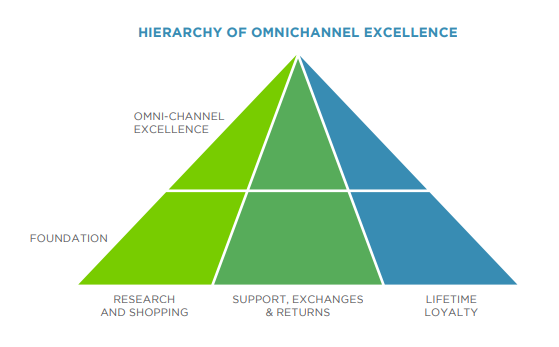
Customer Loyalty Building Blocks

Intuitively, if you’re a retailer, you know that loyalty begins with the basics. Customers have needs, and they come to you to buy the products that will satisfy those needs.
- “I’m having a wedding, and I need party favors.”
- “Soccer season begins in 3 weeks, and I need practice gear.”
- “We’re headed to Mexico for the winter holiday, and I need SPF 30 swimwear.”
Looking for a New 3PL? Start with this Free RFP Template
Cut weeks off your selection process. Avoid pitfalls. Get the only 3PL RFP checklist built for ecommerce brands, absolutely free.
Get My Free 3PL RFPThe Basics
As a retailer, you help shoppers find the products that will make them happy, and you make the purchase process as easy as possible. You deliver where and when you promised you would. And, if your new customer has questions, or wants to return or exchange a product, you answer their questions quickly and make returns and exchanges simple too. You might even go a step further, with a basic loyalty program that rewards purchases.
Except, the basics aren’t simple anymore, because at every step of the buyer journey, customers are not just changing lanes on the highway, they’re switching from planes, to trains to automobiles… to SpaceX (see figure 1).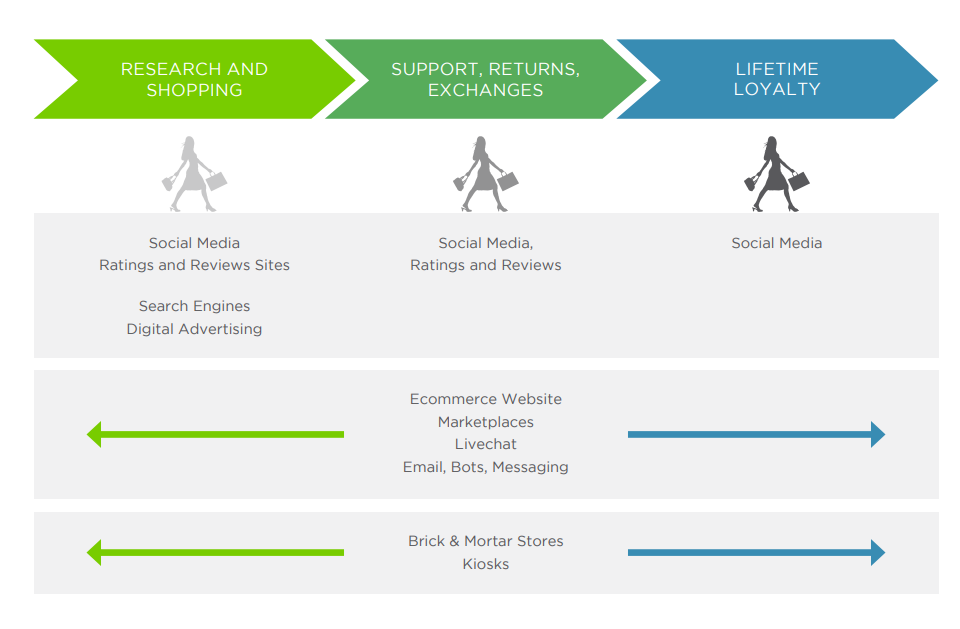
Shopping and Research
To serve your well-informed customers better, you need to know what they know. Before entering the store, what did they learn from google searches, reviews, twitter and your Facebook page? How does pricing and return policy vary between your ecommerce site, marketplaces, and your stores? Are your contact centers giving the same answers to the same questions as your live chat operators and your store associates?
Support, Returns & Exchanges
Return and exchange policy and execution are two of the most important factors consumers consider when choosing a retailer – whether buying online or in stores. In fact, according to the UPS Pulse of the Online Shopper™ study, 66% of shoppers review a retailer’s return policy before making a purchase. At a minimum, this must be a simple process. More advanced retailers are enabling customers to buy, modify an order, return and exchange across multiple contact channels. The easier we make it for customers, the more likely they are to return.
- Are each of your channels providing great support?
- Are they able to interact with a customer the same across all channels?
- Or is your company treating one customer like three:(1) the store customer, (2) the website customer, and(3) the call center customer?
Lifetime Loyalty
Loyalty programs are everywhere we turn. From buy 10, get 1 free punch cards, to rewards points, to discounts off the next purchase, retailers are in an arms race to keep customers coming back. And loyalty programs help you get to know your customers better too. Are you keeping your customers engaged with your brand after they walk out with their first purchase?
Scaling Made Easy: Calis Books’ Fulfillment Journey
Learn how Calis Books expanded nationwide, reduced errors, grew sales while cutting headcount, and saved BIG with Cahoot
See Scale JourneyThe Basics Matter
While there are a myriad of initiatives within each loyalty driver that we can enhance, retailers ignore the basics at their peril:
- 89% of customers have stopped buying from online stores after they’ve experienced poor service (source: Right Now)
- A 5% reduction in customer abandonment rate can increase profitability by 25% – 125%. (Source: “Leading on the Edge ofChaos,” Murphy & Murphy)
Written By:
Indy Pereira
Indy Pereira helps ecommerce brands optimize their shipping and fulfillment with Cahoot’s technology. With a background in both sales and people operations, she bridges customer needs with strategic solutions that drive growth. Indy works closely with merchants every day and brings real-world insight into what makes logistics efficient and scalable.
Turn Returns Into New Revenue
Related Articles
Retail Supply Chain & Logistics Expo New York 2026
September 30-October 1, 2026 | New York, NY Retail Supply Chain & Logistics Expo New York brings together retailers, ecommerce brands, online sellers, supply chain leaders, log...
Outliers Summit 2026
Nov 5–6, 2026 | NEW YORK, NY Outliers Summit brings ambitious founders, builders, creators, operators, and investors together in New York City for two days focused on building and ...
The Lead Summit 2026
May 20-21, 2026 | New York, NY The Lead Summit 2026 brings brand builders, retail leaders, and senior innovators together for two days in New York focused on what’s next for commer...